Van Leo,
by Akram Zaatari, the Arab Image
Foundation
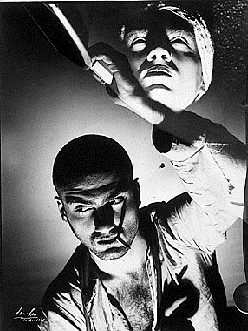
Van Leo, Self
Portrait, Cairo 1944
Van Leo’s work
raises several questionsregarding an artist working method, and relationship
with socio-politicalpowers. These are the two axes around which I would like to
discuss Van Leo’swork having some questions in mind, questions that relate
mainly to theappreciation of photography in the Arab world.
Why is Van Leo’s
work important?
Is it because he
photographed important peoplelike Dalida, Sherihan, Roushdi Abaza, Shadi Abdel
Salam, Youssef Sebai, TahaHussein and others? Then, is good photography about
taking photographs ofimportant people? Stars?
Is it because he
took “nice” portraits of menand women and made them look “good”, more beautiful
than they would expectthemselves? Then is good photography about making people
look good?
Is it because he
did successful compositionswith shade and light? Then can good photography be
restricted to a perfectionof a predetermined aesthetic model? Would photography
become a formula?
When I sat down
behind my video camera, right infront of Van Leo, (I didn’t ask any of these
questions. Instead, I asked himabout the earliest childhood memory he recalls.
I thought he was a photographerwho is interested in capturing images, moods,
creating atmospheres that areclose to fiction, a photographer who spent fifty
years of his life practicinghis work in the same studio, same location looking
out through his window tosee the street changing, in a time when Egyptian
politics, demography, socialcustoms were changing too. I was sure someone like
him would have something totell. To answer my question, Van Leo described, in
details, how he was runningin the schoolyard in Zagazig, chased by the other
kids. He described the scenewith much detail. I could see little Levon, as a
six-year-old boy, running inthe schoolyard. Kids running after him whereas the
teacher says: "go catchLevon, he picked the sponge." He looked at me
and said very happily: “Iwas running whereas no one was able to catch me.”
Van Leo is still
running with that sense ofinsecurity, almost with a feeling of persecution that
never left the manneither the photographer. Instead, it lived inside of him
until this day andmanifested itself in the decisions he took in his life, and
his work. Van Leofelt totally on the margin of socializing in art and culture.
He had intereststhat were different than others’. Furthermore, he never
married, and didn'twant to lead a conventional life. Coming from an Armenian
family who settled inEgypt in 1924 when he was 4 years old. His first contact
with photography musthave been through Varjabedian, an Amenian photographer who
photographed him asa child in Zagazig and who was also a close friend of his
parents. Van Leo’sfamily moved to Cairo in the thirties where he entered the
American Universityin 1940, but soon left it to work with photographer Artinian
in Studio Venus.There he learned how to operate lighting but learned also that
Artinian used tolight all his portraits in a systematic way. In Van Leo noticed
a lack ofstudying the face of every individual. He thought of the human face as
a uniquelandscape that possesses unique characteristics for which light needs
to be designed.This is why a year later, he decided to open a studio with his
brother Angelo,but having no access to financial resources, the two brothers
based themselvesin their parents’ apartment. Differences between them led to
their constantdisagreement, which characterized their brotherhood and which
still does untilthis day. Angelo was a very good in Public Relations, whereas
Van Leo wassatisfied spending all his time in his studio and in the darkroom.
He admiredthe work of Alban, who was also an Armenian photographer from an
oldergeneration, and used to visit his showcase often eager to look at
newphotographs.
Unlike other
photographers from the same period,especially Alban, Van Leo was still doing
this purely technical work until thelast day of his career. He refused to
delegate technical work to any assistant.He did the lighting of the scene
according to the face, which he gave thehighest importance. He exposed the
photograph himself, processed the negative,enlarged it, mixed the chemistry,
processed the print, did the necessaryretouching, and sometimes the hand
coloring. The only elements of work hedidn't do were probably appointment
taking, and house cleaning. He is anindividualist to an extreme.
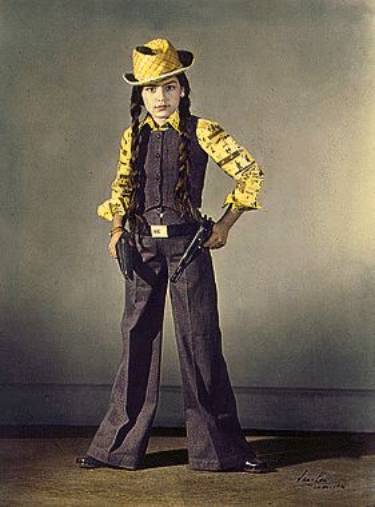
Van Leo, Chirihan,
Cairo 1976
There are
multiple reasons why Van Leo's workwas different since the beginning of his
career in the early forties. He had anexperimental attitude that was very rare
at the times, and perhaps is stillrare among photographers in the Arab World.
Back in the 1940s, Van Leo tookmore than four hundred self-portraits, disguised
in four hundred differentcharacters. There has not been anything like this
quantity in the history ofphotography in the Middle East. From a critical
perspective, it doesn't matterif he dressed himself up as dead corpse, as a
prisoner, as an inspector, as awoman, head shaven, …etc as the intention here
is not to psychologicallyanalyze the photographer’s position to all of these.
The important remains thatVan Leo used photography to display multiple images
of him, assuming differentidentities. At a time when Nationalism was close to
rising in Egypt, Van Leowas plotting, encouraging, and promoting that
multiplicity in the look(people’s façade, people’s landscape), as well as in
their ethnic and religiousbackgrounds. He is the antithesis of “Nationalism”,
even in a period when suchslogans were high up on every occasion. Yet, Van Leo
was not militant, but wasan introvert who believed in his ideas and his work.
This is how it survived tomark the history of photography in Egypt and the Arab
world.
Van Leo always
refused to run after people inpower in order to photograph them. He criticized
photographers who often soughtpublicity, associating their names to the king or
the president, and thereforegiving themselves titles such as "photographer
of his majesty theking" or "photographer of the court", such as
the case of RiadShehata as an example. Van Leo even refused references to
previousphotographers in his title such as Artinian at studio Venus who used to
sign,"Successor of Hanselmann". For him photography is "Mazag",(Arabic
word that means producing for the desire of producing, and notresponding to a
commission), just like what musicians would say about music. Ifhe likes a
model, he asks him / her for extra poses free of charge. His clientswere
artists, casino dancers, singers, writers, famous and ordinary people.
Van Leo is a
disciplined rebel. He held on tohis convictions, but as reaction to a time of
little tolerance, he burned manynudes he had taken in the forties and fifties.
A self-destructive act thatreminds me of what he did in his childhood days,
when his father got himsandals when he wanted shoes. He protested by pretending
to go to school. Hewent there, and imprisoned himself underground waiting for
the kids to finishthe classes to go back home with them. Nobody knew about his
absence.
Roland Barthes
once said that portraits are acombination of three elements, first of which is
the subject itself, the personin portraiture. The second element is the
photographer’s vision of thatsubject, how he/she sees or imagines the person in
portraiture. As an example,an athlete comes to get photographed, and Van Leo
decides to make him pose asRodin’s “Thinker”. The third element is the mask,
i.e. how the subject wants tolook like in front of the photographer, how the
subject wants the photographerto make his picture. I will give the case of Miss
Nadia Abdel Wahed as anexample. She came to Van Leo’s studio wanting to get
photographed strippinguntil she gets completely naked. That’s how she wants
herself to look like.When she got completely naked Van Leo gave her a balloon
to hold. The result isa photograph that has the three elements. That brings us
back to our questions.In my opinion, Van Leo’ importance lies in the fact that
he succeeded incapturing the dynamics of those elements because he treated
photography as astage set, and designed his photographs accordingly. The people
he photographedbelong to a world that is partially his, as if they are actors
in a film, whichmakes his work closer to cinema.

Van Leo, Egyptian
Athlete, Cairo, 1945
Maybe Van Leo was
provoked by my video camera. Hecame up with a great comparison between black
and white photography and theprofession of the traditional tailor, which are
both dying because of the newtechnology, because of mass production. But he
added that a photographpreserves its utility much longer than a costume, at
least for the entire lifeof whomever it refers to. Yet the popular taste in
Egypt, in his opinion,doesn’t care anymore for black and white photography.
(Anyway nobody in theArab world does). He adds that all they see in a
photograph, all they look for,is the color. He said to me: “If I could go back
in time, I wouldn’t havechosen to become photographer”. But he added: “although
I love my work.” Butart in his opinion lies somewhere else. It is the lighting,
the frame, the set,the pose, even the print, the retouching. For him art and
craft areinseparable. This is a quality we find a lot among photographers in
the Arabworld.
Van Leo separated
from his brother in the lateforties, and settled down in the same studio where
he worked for 50 years, andwhere I met him in 1998. He was charming like a
little boy, speaking so vividlyabout his childhood memories. He was angry when
he spoke about Egypt, aboutNasser, and about photography. Angelo had to leave
when his French wife wasasked to leave after Nationalization in 1956, but
regrets it now when there isno way to return back home. Contrary to him, Van
Leo believes he should haveleft to France and never come back. Egypt, in his
opinion, did not give him therecognition he deserves. He went for a short
period to France in the sixties,but decided to return back home a year later.
He didn’t want to leave hisstudio, which was home for him. As much as he loved
being in Egypt, as much ashe was bothered by the transformations that led to
the immigration of theBritish, French, Greek, Jewish, and Italian communities
who settled there sincethe 19th century, and gave Egypt its reputation as the
cosmopolitan center ofthe Middle East. He recalls that his father spoke seven
languages, Armenian athome, Turkish with visiting members of the family, Greek
with owners of grocerystores, English at work since he used to work for a
British company, Arabic onthe street, besides French and Italian.
Unfortunately, things now are not likethey used to be. He cited an old
expression, which probably originated from thecolonial days that says: [there
is no wealth in a country deserted by theJews], referring to the role of Jewish
communities in activating a country'seconomy. Sitting in his studio, he told
me: “I should have left.” Then added:“But I love Egypt” as if to summarize a
love and hate relationship thatconsiders photography and Egypt as one.
But perhaps Van
Leo doesn’t know that hisdecision to stay in Egypt has led to the production of
an invaluable documentof Cairo society in the last fifty years, besides it has
proved that somewherein the Arab world, photographers have learned and
developed photography as alanguage, and as an art of signification.
Van Leo’s work is an experimentation thatremains unprecedented in the region.