|
Palestine notebooks
FIRST NOTEBOOK
From Netanya to Ramallah
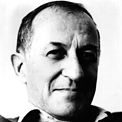
by Juan Goytisolo (Spain)
To return to the occupied territories of Palestine
after a long absence is to find eloquent proof of the cruel
repetitions of history. In June 1988 I visited the West Bank and
Gaza Strip with a Spanish Television crew to film the First Intifada
and in 1995, as special correspondent of El País, in the
disconcerting period of phoney peace which followed the half-baked
Oslo Agreement: the Israeli army had evacuated some areas which it
held in an iron grip and the disillusion among the Palestinian
population confirmed my pessimistic prognosis as to the future of
the region. Seven years on, the situation is much worse than it was
in 1988. The popular uprising of the First Intifada was followed by
the harshest repression. From the moment Sharon walked the Esplanade
of the Mosques we have had not war between two States, but war
between a State equipped with an ultra-modern, efficient army and a
nation that is fragmented, without frontiers, with few weapons and
subject to daily collective humiliation and punishment which itself
originates an endless trickle of ‘martyrs’ ready to self-sacrifice
themselves in deadly attacks, both against the military might of the
occupier and against innocent civilians within the internationally
recognised frontiers of the Jewish state.
The coach taking
the International Parliament of Writers’ delegation from Tel Aviv
airport to Ramallah turns left off the motorway halfway to Jerusalem
and continues along one of the well-surfaced roads linking Israeli
settlements in the territories occupied during the Six Days War.
Traffic on the road between Jerusalem and Ramallah has been halted -
hundreds of Palestinians on foot, residing or working in Jerusalem,
silently wait for their documents to be checked - and we must take a
long detour through the spider’s web of roads enveloping the
besieged towns and cities of Palestine.
As I pointed out
years ago, the landscape of the West Bank and Gaza Strip has been
ripped and torn like cloth made from strips of different materials.
Barbed wire surround Israeli settlements and military posts and the
areas theoretically controlled by the Palestinian Authority: it
protects and excludes, unites separated zones and separates adjacent
territories, weaves in between a labyrinth of islands that are
mutually repelled and attracted. A complex circulatory system of
capillary veins demonstrates the occupier’s desire to split the
territory into slices, remnants, tracts that seemingly impact on
each other yet remain mutually unaware.
Night has fallen by
the time we finally reach the Israeli control, far from the infamous
ghetto of Khalandia. After waiting several minutes we are allowed to
enter Ramallah and, guided by a Palestinian police car, we reach one
of the hotels built in the euphoria after the Oslo Agreement.
Mahmoud Darwish and other representatives of the cultural world are
there. Naturally, our delegation and the journalists accompanying us
are the only guests. Who would decide to holiday or do business in a
city under siege and attack, that is healing recent wounds with
difficulty and apprehensively awaits fresh, more terrible blows?
As dawn breaks in Ramallah - the abrupt configuration of
hills and ravines recalls Amman - the calm is idyllic. It takes me a
while to see from my window the sandbags of an Israeli military
outpost barely two hundred metres from the hotel. To reach the
Palestinian university of Birzeit, students, teachers and
inhabitants from nearby towns must leave their vehicles, cross five
hundred metres of road blocked by the Israelis and pile into one of
the taxis or minibuses waiting on the other side. This is not a
defensive measure but a collective punishment meted on the whole
population. In the interludes between two military incursions,
Sharon’s aim is to to inflict all manner of humiliation on the
Palestinians in a hope as vile as it is illusory of breaking their
spirit of resistance and stifling their rebelliousness.
This
spirit of resistance to injustice was noisily evident in the soirée
of poetry and music at the Alcasaba Theatre, in the city centre. A
packed audience unleashed emotions pent up during the penultimate
siege and occupation. The traces of war are visible everywhere. In
the Amira refugee camp, the brutal consequences of the attack on a
school and destruction of some twenty dwellings via the procedure of
dynamiting the dividing partitions gives us a small sample of what
is awaiting us in Gaza.
An interview with Yassir Arafat did
not figure in our programme and, when it was suggested, I expressed
my disagreement. I have never been attracted by contact with Heads
of State, for I know writers and politicians express themselves at
different levels and nothing they may say is of interest to me. But
I respected the wish of the majority and when it was my turn to
speak during the audience I told him I visited him as yet one more
captive Palestinian, deprived of his rights and freedom of movement.
(As I write this report I am watching images of the attack on the
residence where he received us. Paradoxically, Sharon’s personal
rage restores to Arafat a moral authority that was in doubt.. As in
Beirut in 1982 Arafat will emerge victorious from the test, alive or
dead. What the general fails to understand is that Arafat thrives in
defeat and rises like the Phoenix from the ashes).
On our
journey from Ramallah to Gaza, the landscape of settlements,
frequently constructed on the ruins of Palestinian villages, evokes
yet again the chess-board of reciprocal exclusion between the
settlements and the remains of the autonomous areas, to the point of
confusing the inexpert visitor as to what they include and de-limit,
to what is ‘inside’ and what is the ‘outside’.
The Erez
checkpoint, where several United Nations vehicles are parked, is a
vast desert space surrounded by barbed wire: Palestinians who work
in Israel are no longer authorised to cross the frontier, so the
economic situation on the Gaza Strip has deteriorated further. After
a long wait we enter the hapless territory of the Palestine
Authority. Because we are late, we head directly across Gaza,
towards the refugee camps of Khan Yunes and Rafah. The main roadway
has been blocked and we have to take the coastal road towards Dair
el Balah. The nearby complex of settlements in Gush Khatif, with its
vast military base surrounded by barbed wire and electrified fences,
shelters hangars, barracks, stores, giant radar systems,
communication towers, an enormous parking lot for bulldozers and
jeeps as well as tourist complexes, hotels and beaches reserved for
settlers. Over the last seven years this settlement has mushroomed:
the occupier has dynamited several houses and uprooted hundreds of
fruit-trees. The Israelis are currently building a bridge over the
blocked road to link Gush Khatif with the settlement of Kfar Darom.
The territory where over a million Palestinians stew together
shrinks like shark’s skin. The number of settlers occupying forty
per cent of the fertile part of the Strip number less than three
thousand. The Netzarim settlement has only seventy-six residents.
On our arrival in Khan Yunes a desolate spectacle greets us:
skeletons of houses, bullet-ridden façades, a refugee camp destroyed
by missiles and belicose helicopters, ruins smashed by bulldozers, a
cement wall higher than the old Berlin Wall. The settlements extend
their perimeters and pitilessly reduce the population’s living
space.
But the situation in Rafah is even worse: the refugee
camp adjacent to the Egyptian frontier where the Israeli army has
maintained a corridor to control and hermetically seal the Strip -,
was devastated in less than two hours by a would-be anti-terrorist
operation that brought dozens of victims.
I write these
lines a few days after the bloody attack in Netanya in which twenty
Israelis died in a hotel where they were celebrating the start to
the Jewish Passover. Seven years ago when I was also writing reports
on my trip to Israel and the occupied territories, another human
bomb wrought similar carnage in the same city and, the then Israeli
Prime Minister, Isaac Rabin declared that to put an end to these
suicide attacks ‘the only solution [consisted] in the total
separation of Israel and the [occupied] territories’. An Israeli
extremist later murdered Rabin and today another fanatic,
responsible, among his other ‘feats’, for the massacres of Sabra and
Chatila, keeps a firm hold on the helm and leads Israel into a war
without end, to the self-destruction of its moral values and its own
physical existence.
As I wrote earlier, history is repeating
itself and Sharon’s blind revenge-taking for the fresh carnage in
Netanya augurs a sombre future. The eruption of the army into
Ramallah and its attack on Arafat’s presidential palace will further
extend the cycle of hatred and violence. Sharon wants not
interlocutors but helots. But no peace, no truce will be possible
without an agreement that guarantees the lives, work and dignity of
Palestinians within a State that has internationally recognised
frontiers. Otherwise, as Octavio Paz wrote, speaking of the
destinies imposed on peoples throughout history, ‘in a closed world
without exits, death is all, death alone has value’.
|