

 |
 |
 |
 |
 |
 |
 |
 |
 |
 |
|
|
|
About the Sudan CampaignSudan is not only a terrorist nation that has triggered United Nations and U.S. government sanctions, it is also a genocidal one. In Sudan's 17
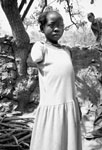
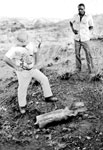
year-old civil conflict, two million people — The Sudanese government and its agents are bombing, burning, and raiding southern villages, enslaving and raping thousands of women and children, kidnapping and forcibly converting Christian boys, annihilating entire villages or relocating them into concentration camps called "peace villages," and preventing international food aid from reaching starving villages. Individual Christians, including clergy, have been frequently imprisoned, flogged, tortured, and assassinated for their faith. The regime gives support and sanctuary to the Lord's Resistance Army, which carries out systematic murder, rape, and kidnapping of neighboring Ugandan children. The reign of terror reaches beyond the non-Muslim community to even Muslims suspected of failing to adhere to the government's extremist policies and ideology. It is such persecution and brutality that led the U.S. House of Representatives to overwhelmingly adopt Resolution 75 on June 15, 1999, which finds that "the National Islamic Front government is deliberately and systematically committing genocide in southern Sudan, the Nuba Mountains, and the Ingressa Hills"
That the government of Sudan has not yet prevailed in the war may be due to the fact that, until 1999, it was financially strapped, and in default to the IMF and other international lenders. In August 1999, oil developed in south Sudan by foreign companies in a joint venture partnership with the Khartoum government came on stream, and has begun to provide windfall profits for the regime, as well as a critical source of new international respectability. Though U.S. companies are barred by anti-terrorist sanctions from investing in Sudan, foreign companies investing in Sudan's oil pipeline are permitted to raise funds from U.S. capital markets. Talisman Energy of Canada and the Chinese government's PetroChina are Khartoum's two major oil partners which are listed on the New York Stock Exchange. The proceeds from the oil revenues are being used to support the Sudanese military's actions. As a lead editorial in the Washington Post in November 1999 concluded:
There is ample evidence indicating that the human tragedy in Sudan is becoming worse. In 2000, the government of Sudan more than doubled its bombing campaign of humanitarian and civilian targets in southern Sudan. Since February 2000, a Catholic primary school in the Nuba mountains, Samaritan's Purse hospital, near Juba, operated by the family of Rev. Billy Graham, a clinic of Voice of the Martyrs, a clinic of Irish Concern, a Red Cross plane, and other relief centers, churches and schools in south Sudan have been bombed by the government. In August, the regime bombed the UN Operation Lifeline Sudan, bringing the international aid effort to a complete halt for several weeks. Since 1998, a growing national coalition of rights groups, religious organizations, and students have been mobilizing to stop the following five genocidal actions of the Sudan regime:
The United States needs a strong non-military policy to stop the genocide in Sudan — a policy to keep the pressure on Khartoum by publicizing Sudan's atrocities and isolating the regime until the carnage, slavery, rape, and deliberate mass starvation stop. President Clinton never raised his voice publicly to decry the genocide in Sudan and failed to rally our allies to press the regime. In testimony before Congress on September 28, 2000, the U.S. Commission on International Religious Freedom noted it was "struck by the huge disparity between the genocidal scale of atrocities being committed by the government of Sudan and the muted response of the President and Secretary of State of the United States." Clinton ignored the strong appeals for U.S. non-military leadership by Congressmen Frank Wolf, Chris Smith, Don Payne, and Tom Tancredo, by Senators Sam Brownback, Bill Frist, and Jesse Helms, and by the Congressional Black Caucus. Clinton deferred the request of Nobel Laureate and Holocaust poet Elie Wiesel to meet over U.S. policies on Sudan, "site of the world's most long-lasting religious persecution and genocide," which Wiesel wrote "haunted" him. Though Sudan stayed on the administration's short list of "countries of particular concern" for religious persecution, the State Department's second annual religious freedom report of September 2000, on which this designation was based, was severely flawed. Nowhere did the report convey a sense that genocide is being waged by the government against its southern religious and racial minorities, or mention the lethal role of oil development. Furthermore, the U.S. government, through its heavy involvement with the United Nations "Operation Lifeline Sudan," continues to allow the very authorities in Sudan who are responsible for mass, selective starvation to veto when, where, and if international food aid can be delivered to south Sudan - a veto that Khartoum has not hesitated in exercising. In the summer of 2000, Administration officials began quietly to implement a new — and for the first time comprehensive — policy on Sudan that sets down markers for human rights progress, telling Khartoum that diplomatic and economic relations will be restored only if there are measurable reforms in the areas of human rights, humanitarian aid, peace negotiations and terrorism. Under this policy the U.S. Ambassador to the United Nations and other Administration officials made it a priority to keep Sudan off the Security Council, and succeeded in a General Assembly vote that totally repudiated Sudan (113 to 55). U.S. foreign policy toward the government of Sudan must be pursued with unwavering firmness and promoted as a policy priority. Unfortunately, to date, with the single exception of the UN Security Council vote, the policy has been implemented half-heartedly by quiet diplomacy and not by those at the highest levels of government. Throughout the Clinton Administration, the Sudan genocide languished on the "back-burner" of U.S. foreign policy as documented in the administration's own January 2000 "Interagency Report on Humanitarian Aid." The coming to office of the Bush Administration offers new hope that official American indifference to Sudan's genocide will end. As the UN Security Council effort showed, effective U.S. leadership makes a difference. |
||
|
|
|
| |
|
Center for Religious Freedom • A
Division of Freedom House 1319 18th Street, NW • Washington, DC 20036 Telephone: (202) 296-5101 • Fax: (202) 296-5078 E-mail: religion@freedomhouse.org |
 |
| |
|
|
Website Design by Belmont Design, Inc. |
|