
| Publications | Archives | Index | Energy Tables | Directory | Conferences | Home Page |
VOL. XLV
No 43
New Energy Technologies: Trends In Upstream Oil And Gas Technology
By Dr Adnan Shihab-Eldin
The following is an extract from a paper entitled New Energy Technologies: Trends in Development of Clean and Efficient Energy Technologies delivered at the 8th International Energy Forum, Osaka, Japan, 21-23 September, by Adnan Shihab-Eldin, Director of Research Division, OPEC, Vienna. The views expressed are the author’s own.
All energy outlook studies (except those driven by an ideological environmental agenda), including those of the IEA, the US Department of Energy (DoE), and OPEC, show demand for oil and gas continuing to grow through 2020-30 and probably beyond, mainly in the transportation sector (for oil) and the electric power generation sector (for gas). Demand for oil is expected to continue to grow by a healthy average of 1.7% per annum through 2020, with more modest growth likely through the mid-century.
On the other hand, most large, easily accessible and low-cost oil and gas reserves have already been discovered and are being depleted. However, the oil and gas resource base is known to be much larger, and additional unconventional oil and gas resources are known to exist in even greater abundance.
The multinational oil companies have developed a remarkable array of powerful new and advanced technologies and tools for use in exploration, reservoir evaluation and production and processing, mainly outside OPEC member countries. These developments have been led by the multinationals themselves, with strong support from the governments of key OECD countries (mainly the US), through ambitious and well-funded R&D programs. Table 1 shows the most important of these technologies that have had, or are likely to have, significant impact on availability and cost-competitiveness of future oil and gas resources. The listed technologies are grouped under categories representing different stages of the upstream industry, summarizing their current state of development and application, as well as prospects for further development, where applicable:
Table 1
Summary of New and Advanced Upstream Technologies
|
Field of Application /Technology |
Challenges and Future Prospects |
Time Horizon for Commercial Deployment |
|
SEISMIC |
|
|
|
· 3D Seismic Imaging |
Additional improvements (eg vertical cable) for a wider use of applications in offshore areas. |
More and more widely used |
|
· 4D (Time-lapse seismic surveys) |
Optimize reservoir management: to characterize reservoir properties, monitor production efficiency, and estimate volume from inception through the life of the field. High prospect, but costly, processing & interpretation challenges. |
In progress 5-10 years |
|
· 4C (Multi-component Seismic Imaging) |
Indispensable tool in specific conditions: prospects under salt domes or basalt and for imaging beneath gas accumulations. Cost, processing & interpretation challenges. |
Still limited use, but moderate prospects for the future |
|
– Advanced Drilling, Completion and Stimulation Technologies: |
Improved access to hostile environment at different geographical areas and conditions (eg high P&T range). |
|
|
– Horizontal, directional and multilateral drilling |
Better access and more efficient production. |
High prospects for wider use |
|
– Coiled tubing, Expandable tubing |
Reduce drilling time, but still very expensive. A niche application in horizontal wells. |
In progress |
|
– Slim hole drilling |
Lower rig costs. |
In progress – 5-10 years |
|
– Mini TLPs (Tension Leg Platform) |
Economic for smaller fields. |
In progress – 5-10 years |
|
– Logging Tools – Measurement while drilling (MWD) – Logging while drilling (LWD) – Nuclear Magnetic Resonance Imaging (NMRI) |
– more accurate well placement and better performance
– lowered rig cost by faster drilling – greater accuracy for detecting fluid type and distribution |
In use but not widely yet
Infancy stage In use but not widely yet |
|
– The seafloor to surface links (mooring system and risers) |
Lighter, more flexible, corrosion resistant and stronger material. Replace steel with titanium, synthetic or composite materials. |
Under development 5-10 years |
|
“Dual Gradient Drilling” |
To avoid blow out. |
Ongoing test and development |
|
Drilling mud technology |
Suitable for extreme conditions (T:0°-150°C and P up to 400 bars). |
In progress |
|
Vessels, Floating Supports – FPSOs or upgraded unit – FDPSOs (new concept) |
New concept (or upgraded) of deepwater rig unit to economically suit various oceanographic conditions. |
In use already Growing – in 5-10 years’ time |
|
Intelligent completion (“smart well”) |
Improve ultimate recovery. |
Very early stage |
|
Subsea completion |
Reduce development time for new (smaller) offshore fields. |
In progress |
|
Sub-Sea Equipment |
Further R&D to reduce costs. |
In use and further in progress |
|
Meteo-ocean, seabed condition monitoring |
|
|
|
Digital E&P or IT Management |
To develop innovations in E&P information technology management. |
Ongoing |
|
Earth Modeling Integrated Reservoir Characteriza- tion and Modeling |
Switch Geological Earth Model into more “Dynamic Model.” – accurate architecture of reservoir bodies and flow dynamic of fluids. – prediction of production rates under various development scenarios. Still costly for NOCs in Developing Countries. |
Widely used in major IOCs but in progress for other users. High prospect |
|
EOR/IOR · Thermal Recovery: Steam Injec- tion and In Situ Combustion · Gas-Miscible and Immiscible Recovery · Chemical Recovery · Microbial & Biochemical Recovery |
Further improvement of methods and selection to get optimal recovery factor. |
In use } } In use } } } } |
|
Reservoir Life Extension Technologies |
Further improvement. |
In use |
|
Unconventional Oil (Bitumen & Extra heavy Oil)
– Mining and Extraction processes – New in situ recovery method (eg SAGD, Vapex) – Upgrading technology (Aqua- conversion, BioARC) |
Increase recovery rate, say 15-25% from 12% under the current level of technology (without excessive energy consumption). – Further improvement of efficiency. – Further improvement in horizontal well design & lifting system. – Finding methods to improve energy efficiency & reduce emissions. |
Before 2005
Ongoing expansion efforts |
|
Gas to Liquid Technologies |
To reduce overall costs to the point that the process is economically competitive with the conventional crude oil/refining value chain; Great potential for fuel alternatives and higher value products. |
In progress – 10 years for longer scale |
|
Methane hydrate |
Explore more concentrated resource base, R&D. |
· 30-50 years |
_____________
Notes:
– FPSOs : Floating Production Storage and Offloading vessels.
– FDPSOs: Floating Drilling Production Storage and Offloading vessels.
– SAGD: Steam Assisted Gravity Drainage.
– VAPEX: Vaporized Extraction, vaporized hydrocarbon solvent to reduce the viscosity of heavy oil.
– BioARC: Biocatalytic Aromatic Ring Cleavage.
The main driving force behind these new upstream technologies is the desire to:
Increase access to economically exploitable new liquids and gas reserves;
Improve recovery rates of existing reserves (typically only 35% of which are currently recoverable by primary and secondary recovery technologies);
Reduce exploration, development and production costs;
Mitigate adverse environmental efforts and risks to public health and safety from E&P activities; and
Develop production and conversion technologies for clean liquid fuels from unconventional resources, gas and coal.
The applications of these breakthrough upstream technologies over the past two decades or so have contributed in a large way to the significant expansion of hydrocarbon resources, mainly outside OPEC. Nevertheless, increasing the supply of oil and natural gas from diversified sources and regions – essential for long-term sustainability and security of oil and gas supplies – would require more focus on issues of technology transfer to producing countries, where the use of many of these advanced technologies has not yet fully materialized. Focus is also needed on the development and use of more advanced oil and gas production technologies suited to the special characteristics of present and future large oil fields typically found in some OPEC countries, where most oil reserves and resources are located.
Remarkable, directional and multilateral drilling technologies and 3D seismic surveys have had a dramatic effect on upstream activity, driving large discoveries in deep-water areas of the US Gulf of Mexico, Brazil and West Africa. The more detailed data acquired by 3D seismic surveys means that fewer dry holes are drilled. This results in significant reductions in the cost of finding commercial oil, as the cost of a dry hole can be millions of dollars, while an offshore 3D survey is less expensive than a comparable onshore one. The use of 3D seismic technologies has also provided new discoveries under salt layers and other frontier areas (eg the Alaska North Slope and its adjacent offshore area) previously inaccessible to oil and gas explorers.
Technical progress has indeed increased exploration efficiency through greater drilling success and progressively improved the worldwide success rate from 15% in the 1970s to 20% today. However, in terms of volumes discovered, reserves per exploration well show a continued disappointing trend, declining from 30mn boe/well in the1970s to about 10mn boe/well currently. Total discoveries per year have declined steadily from, on average, 70bn boe/year in the 1960s, when foreign companies had access to exploration in the OPEC Middle East, to 20bn boe/year in the 1990s. This has also been accompanied by a decline in the average field size of those discoveries, from over 200mn boe per discovery in the 1960s to less than 50mn boe in the 1990s. Giant discoveries are possibly not a thing of the past yet, but they are rare these days (see Figure 1). Furthermore, where giant field potential does exist, it is usually in deep-water frontiers or hostile regions in terms of climate and/or politics.
Despite the decreasing trend in new discoveries, reserves-to-production ratios have remained relatively constant and worldwide reserve levels continue to rise. Moreover, non-OPEC countries have maintained their R/P ratios at between 16 and 19 years since the 1970s. This is reflected in the fact that the oil industry in general, and non-OPEC producing regions in particular, are becoming more successful at adding more reserves within existing mature fields through enhanced or improved recovery techniques (EOR, IOR) and better field management. In the US alone, oil production through EOR in 1990 provided 550,000 b/d (6.2% of US production).
Table 2 shows five selected fields where recoveries have been well established within a range of 38% to 59%. These fields have typically benefited from the application of the latest technologies during their lifetimes.
Table 2
|
Field Name |
Field Location |
Reserves Recovered (%) |
|
Statfjord |
Norwegian North Sea |
59 |
|
Brent |
UK North Sea |
57 |
|
Prudhoe Bay |
Alaska |
54 |
|
Forties |
UK North Sea |
39 |
|
Ekofisk |
Norwegian North Sea |
38 |
__________
Source: Petroleum Review, March 2000.
More advanced exploration and production technologies are continuously being developed, in order to find more reserves and maximize cost reduction, including:
4D time-lapse seismic and visualization technology for pinpointing remaining recoverable reserves, as well as new four-component (4C) seafloor seismic systems allowing explorers to see geological features below layers of gas, thus improving geological data.
New logging techniques, control systems, and down-hole sensors that allow better control of oil well performance, lowering costs by cutting well-logging times and reducing the number of costly sub-sea repairs and adjustments that are needed.
Coiled tubing for well workovers, completions and flow lines, as well as artificial lift options for producing wells and intelligent, or smart completions.
More effective methods and products for well stimulation and treatment.
There are still many challenges to be faced, however, in particular, those relating to future potential trends for additional liquids supply:
Improving recovery efficiency: significant hydrocarbons are still left behind, even after implementing water flooding and EOR processes.
Developing the huge amount of known unconventional deposits (bitumen, extra-heavy/ultra-heavy oil, tar sands and oil shale) and reducing the cost of exploitation and upgrading processes (eg conversion to synthetic crudes).
Designing production technology for deep-water developments.
Implementing new technology in the low-cost, huge-reserve OPEC Middle East.
Realizing technology breakthroughs for improved or new gas-to-liquid (GTL) processes, leading to large reductions in capex and/or opex that might lead some GTL players to committing to large-scale projects.
Assessing the scientific bases of methane hydrate resources and, if the indicated large resource levels are validated, selecting the environmentally sound technological approach for their exploitation.
Looking forward to the next decades, advances in technology will, to be sure, continue to be a key driver in finding more reserves that will add to the security of future oil supply.
Within the global context, it has been indicated that future technological progress will allow the development of huge amounts of unconventional oil at lower costs and will therefore enable the extension of oil supply elasticity and dominance in the long run.
Impact of Upstream Technology on the Cost of Oil Supply:
Many experts agree that the key impact of technology is the continued reduction in the cost of oil supply, which allows, in part, an increase in the competitiveness of unconventional oil production and the extension of non-OPEC oil supply elasticity (and on the other side, also as regards OPEC supply). Others see a different pattern of future cost trends, depending on the assumptions used as the major key influencing factors.
The historical evolution of upstream costs (exploration, development and production) over the past two decades shows a dramatic reduction from $27/B in 1981 (in 2002 dollars) to less than $9/B in 1995. Technological developments were the main drivers behind this drop. During the 1990s, however, the apparent trend was largely flat, with a slight increase in the latter part of the decade. Apart from the cycle of E&P costs, the relentless pressure on costs during recent years can be attributed to factors including the increasing maturity of producing fields, the declining size of new finds, more stringent environmental regulations, and the access/competition dilemma.
The challenging question now becomes: will technology keep forcing upstream costs down, and will E&P activities remain on track? The contribution of technological advances in cutting E&P costs is indisputable and may well continue, but the actual magnitude of the impact on future additions to world oil supply is difficult to predict.
Over the longer term, the trend for upstream costs in a given country or region will depend on forces including the maturity of the resource base, the pace of new investment (especially for low-cost OPEC producers), and further technological breakthroughs (especially for higher-cost non-OPEC producers).
The implementation of new upstream technology through foreign capital participation in the low-cost, high-reserve areas will not only increase world production capacities in the long term, but also optimize worldwide average cost reductions.
For mature regions like the North Sea and the US, where larger and more easily accessible prospects have been found, developed using the latest technologies, and subsequently quickly depleted, the average upstream cost per barrel tends to be more expensive. Cost reductions will probably, therefore, be limited and are highly dependent on new technological breakthroughs. The ability to manage huge amounts of data and the application of the right technology to the right prospects are also important key sources of present and future cost-cutting efforts.
Methane Hydrates
The staggering recent estimates of the potential solid, pure natural gas resources that may exist at the bottom of continental margins and permafrost regions, in the form of solid methane hydrate (ice) crystals, warrant the modest R&D programs being pursued in the US, Japan and some other countries. These efforts aim to verify and validate the reliability of the estimates, study the science-base and explore the advanced technology that needs to be developed one day to detect and produce natural gas from these huge (methane hydrate) resources, in a manner consistent with the sustainability of global marine and terrestrial environments. Methane hydrate technology is at a very early stage of exploratory R&D, which covers:
Resource characterization: To prepare, analyze, evaluate, and develop the databases, mapping systems, and models necessary to understand and characterize methane hydrate deposits in the geological environment, and accurately estimate the methane resource availability in hydrate deposits.
Production: To develop reservoir and process engineering modeling and recovery technologies.
Global carbon cycle: To analyze the dual roles of hydrates in the global carbon cycle and their relationship to global climate change.
Safety and sea floor stability: To analyze safety and sea floor stability due to methane hydrate occurrence associated with the exploration, production and transportation of conventional hydrocarbons.
| Publications | Archives | Index | Energy Tables | Directory | Conferences | Home Page |
VOL. XLV
No 43
New Energy Technologies: Trends In Upstream Oil And Gas Technology
By Dr Adnan Shihab-Eldin
The following is an extract from a paper entitled New Energy Technologies: Trends in Development of Clean and Efficient Energy Technologies delivered at the 8th International Energy Forum, Osaka, Japan, 21-23 September, by Adnan Shihab-Eldin, Director of Research Division, OPEC, Vienna. The views expressed are the author’s own.
All energy outlook studies (except those driven by an ideological environmental agenda), including those of the IEA, the US Department of Energy (DoE), and OPEC, show demand for oil and gas continuing to grow through 2020-30 and probably beyond, mainly in the transportation sector (for oil) and the electric power generation sector (for gas). Demand for oil is expected to continue to grow by a healthy average of 1.7% per annum through 2020, with more modest growth likely through the mid-century.
On the other hand, most large, easily accessible and low-cost oil and gas reserves have already been discovered and are being depleted. However, the oil and gas resource base is known to be much larger, and additional unconventional oil and gas resources are known to exist in even greater abundance.
The multinational oil companies have developed a remarkable array of powerful new and advanced technologies and tools for use in exploration, reservoir evaluation and production and processing, mainly outside OPEC member countries. These developments have been led by the multinationals themselves, with strong support from the governments of key OECD countries (mainly the US), through ambitious and well-funded R&D programs. Table 1 shows the most important of these technologies that have had, or are likely to have, significant impact on availability and cost-competitiveness of future oil and gas resources. The listed technologies are grouped under categories representing different stages of the upstream industry, summarizing their current state of development and application, as well as prospects for further development, where applicable:
Table 1
Summary of New and Advanced Upstream Technologies
|
Field of Application /Technology |
Challenges and Future Prospects |
Time Horizon for Commercial Deployment |
|
SEISMIC |
|
|
|
· 3D Seismic Imaging |
Additional improvements (eg vertical cable) for a wider use of applications in offshore areas. |
More and more widely used |
|
· 4D (Time-lapse seismic surveys) |
Optimize reservoir management: to characterize reservoir properties, monitor production efficiency, and estimate volume from inception through the life of the field. High prospect, but costly, processing & interpretation challenges. |
In progress 5-10 years |
|
· 4C (Multi-component Seismic Imaging) |
Indispensable tool in specific conditions: prospects under salt domes or basalt and for imaging beneath gas accumulations. Cost, processing & interpretation challenges. |
Still limited use, but moderate prospects for the future |
|
– Advanced Drilling, Completion and Stimulation Technologies: |
Improved access to hostile environment at different geographical areas and conditions (eg high P&T range). |
|
|
– Horizontal, directional and multilateral drilling |
Better access and more efficient production. |
High prospects for wider use |
|
– Coiled tubing, Expandable tubing |
Reduce drilling time, but still very expensive. A niche application in horizontal wells. |
In progress |
|
– Slim hole drilling |
Lower rig costs. |
In progress – 5-10 years |
|
– Mini TLPs (Tension Leg Platform) |
Economic for smaller fields. |
In progress – 5-10 years |
|
– Logging Tools – Measurement while drilling (MWD) – Logging while drilling (LWD) – Nuclear Magnetic Resonance Imaging (NMRI) |
– more accurate well placement and better performance
– lowered rig cost by faster drilling – greater accuracy for detecting fluid type and distribution |
In use but not widely yet
Infancy stage In use but not widely yet |
|
– The seafloor to surface links (mooring system and risers) |
Lighter, more flexible, corrosion resistant and stronger material. Replace steel with titanium, synthetic or composite materials. |
Under development 5-10 years |
|
“Dual Gradient Drilling” |
To avoid blow out. |
Ongoing test and development |
|
Drilling mud technology |
Suitable for extreme conditions (T:0°-150°C and P up to 400 bars). |
In progress |
|
Vessels, Floating Supports – FPSOs or upgraded unit – FDPSOs (new concept) |
New concept (or upgraded) of deepwater rig unit to economically suit various oceanographic conditions. |
In use already Growing – in 5-10 years’ time |
|
Intelligent completion (“smart well”) |
Improve ultimate recovery. |
Very early stage |
|
Subsea completion |
Reduce development time for new (smaller) offshore fields. |
In progress |
|
Sub-Sea Equipment |
Further R&D to reduce costs. |
In use and further in progress |
|
Meteo-ocean, seabed condition monitoring |
|
|
|
Digital E&P or IT Management |
To develop innovations in E&P information technology management. |
Ongoing |
|
Earth Modeling Integrated Reservoir Characteriza- tion and Modeling |
Switch Geological Earth Model into more “Dynamic Model.” – accurate architecture of reservoir bodies and flow dynamic of fluids. – prediction of production rates under various development scenarios. Still costly for NOCs in Developing Countries. |
Widely used in major IOCs but in progress for other users. High prospect |
|
EOR/IOR · Thermal Recovery: Steam Injec- tion and In Situ Combustion · Gas-Miscible and Immiscible Recovery · Chemical Recovery · Microbial & Biochemical Recovery |
Further improvement of methods and selection to get optimal recovery factor. |
In use } } In use } } } } |
|
Reservoir Life Extension Technologies |
Further improvement. |
In use |
|
Unconventional Oil (Bitumen & Extra heavy Oil)
– Mining and Extraction processes – New in situ recovery method (eg SAGD, Vapex) – Upgrading technology (Aqua- conversion, BioARC) |
Increase recovery rate, say 15-25% from 12% under the current level of technology (without excessive energy consumption). – Further improvement of efficiency. – Further improvement in horizontal well design & lifting system. – Finding methods to improve energy efficiency & reduce emissions. |
Before 2005
Ongoing expansion efforts |
|
Gas to Liquid Technologies |
To reduce overall costs to the point that the process is economically competitive with the conventional crude oil/refining value chain; Great potential for fuel alternatives and higher value products. |
In progress – 10 years for longer scale |
|
Methane hydrate |
Explore more concentrated resource base, R&D. |
· 30-50 years |
_____________
Notes:
– FPSOs : Floating Production Storage and Offloading vessels.
– FDPSOs: Floating Drilling Production Storage and Offloading vessels.
– SAGD: Steam Assisted Gravity Drainage.
– VAPEX: Vaporized Extraction, vaporized hydrocarbon solvent to reduce the viscosity of heavy oil.
– BioARC: Biocatalytic Aromatic Ring Cleavage.
The main driving force behind these new upstream technologies is the desire to:
Increase access to economically exploitable new liquids and gas reserves;
Improve recovery rates of existing reserves (typically only 35% of which are currently recoverable by primary and secondary recovery technologies);
Reduce exploration, development and production costs;
Mitigate adverse environmental efforts and risks to public health and safety from E&P activities; and
Develop production and conversion technologies for clean liquid fuels from unconventional resources, gas and coal.
The applications of these breakthrough upstream technologies over the past two decades or so have contributed in a large way to the significant expansion of hydrocarbon resources, mainly outside OPEC. Nevertheless, increasing the supply of oil and natural gas from diversified sources and regions – essential for long-term sustainability and security of oil and gas supplies – would require more focus on issues of technology transfer to producing countries, where the use of many of these advanced technologies has not yet fully materialized. Focus is also needed on the development and use of more advanced oil and gas production technologies suited to the special characteristics of present and future large oil fields typically found in some OPEC countries, where most oil reserves and resources are located.
Remarkable, directional and multilateral drilling technologies and 3D seismic surveys have had a dramatic effect on upstream activity, driving large discoveries in deep-water areas of the US Gulf of Mexico, Brazil and West Africa. The more detailed data acquired by 3D seismic surveys means that fewer dry holes are drilled. This results in significant reductions in the cost of finding commercial oil, as the cost of a dry hole can be millions of dollars, while an offshore 3D survey is less expensive than a comparable onshore one. The use of 3D seismic technologies has also provided new discoveries under salt layers and other frontier areas (eg the Alaska North Slope and its adjacent offshore area) previously inaccessible to oil and gas explorers.
Technical progress has indeed increased exploration efficiency through greater drilling success and progressively improved the worldwide success rate from 15% in the 1970s to 20% today. However, in terms of volumes discovered, reserves per exploration well show a continued disappointing trend, declining from 30mn boe/well in the1970s to about 10mn boe/well currently. Total discoveries per year have declined steadily from, on average, 70bn boe/year in the 1960s, when foreign companies had access to exploration in the OPEC Middle East, to 20bn boe/year in the 1990s. This has also been accompanied by a decline in the average field size of those discoveries, from over 200mn boe per discovery in the 1960s to less than 50mn boe in the 1990s. Giant discoveries are possibly not a thing of the past yet, but they are rare these days (see Figure 1). Furthermore, where giant field potential does exist, it is usually in deep-water frontiers or hostile regions in terms of climate and/or politics.
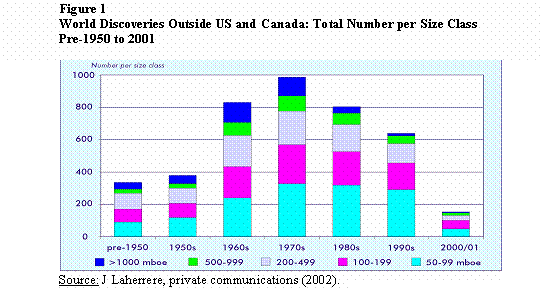
Despite the decreasing trend in new discoveries, reserves-to-production ratios have remained relatively constant and worldwide reserve levels continue to rise. Moreover, non-OPEC countries have maintained their R/P ratios at between 16 and 19 years since the 1970s. This is reflected in the fact that the oil industry in general, and non-OPEC producing regions in particular, are becoming more successful at adding more reserves within existing mature fields through enhanced or improved recovery techniques (EOR, IOR) and better field management. In the US alone, oil production through EOR in 1990 provided 550,000 b/d (6.2% of US production).
Table 2 shows five selected fields where recoveries have been well established within a range of 38% to 59%. These fields have typically benefited from the application of the latest technologies during their lifetimes.
Table 2
|
Field Name |
Field Location |
Reserves Recovered (%) |
|
Statfjord |
Norwegian North Sea |
59 |
|
Brent |
UK North Sea |
57 |
|
Prudhoe Bay |
Alaska |
54 |
|
Forties |
UK North Sea |
39 |
|
Ekofisk |
Norwegian North Sea |
38 |
__________
Source: Petroleum Review, March 2000.
More advanced exploration and production technologies are continuously being developed, in order to find more reserves and maximize cost reduction, including:
4D time-lapse seismic and visualization technology for pinpointing remaining recoverable reserves, as well as new four-component (4C) seafloor seismic systems allowing explorers to see geological features below layers of gas, thus improving geological data.
New logging techniques, control systems, and down-hole sensors that allow better control of oil well performance, lowering costs by cutting well-logging times and reducing the number of costly sub-sea repairs and adjustments that are needed.
Coiled tubing for well workovers, completions and flow lines, as well as artificial lift options for producing wells and intelligent, or smart completions.
More effective methods and products for well stimulation and treatment.
There are still many challenges to be faced, however, in particular, those relating to future potential trends for additional liquids supply:
Improving recovery efficiency: significant hydrocarbons are still left behind, even after implementing water flooding and EOR processes.
Developing the huge amount of known unconventional deposits (bitumen, extra-heavy/ultra-heavy oil, tar sands and oil shale) and reducing the cost of exploitation and upgrading processes (eg conversion to synthetic crudes).
Designing production technology for deep-water developments.
Implementing new technology in the low-cost, huge-reserve OPEC Middle East.
Realizing technology breakthroughs for improved or new gas-to-liquid (GTL) processes, leading to large reductions in capex and/or opex that might lead some GTL players to committing to large-scale projects.
Assessing the scientific bases of methane hydrate resources and, if the indicated large resource levels are validated, selecting the environmentally sound technological approach for their exploitation.
Looking forward to the next decades, advances in technology will, to be sure, continue to be a key driver in finding more reserves that will add to the security of future oil supply.
Within the global context, it has been indicated that future technological progress will allow the development of huge amounts of unconventional oil at lower costs and will therefore enable the extension of oil supply elasticity and dominance in the long run.
Impact of Upstream Technology on the Cost of Oil Supply:
Many experts agree that the key impact of technology is the continued reduction in the cost of oil supply, which allows, in part, an increase in the competitiveness of unconventional oil production and the extension of non-OPEC oil supply elasticity (and on the other side, also as regards OPEC supply). Others see a different pattern of future cost trends, depending on the assumptions used as the major key influencing factors.
The historical evolution of upstream costs (exploration, development and production) over the past two decades shows a dramatic reduction from $27/B in 1981 (in 2002 dollars) to less than $9/B in 1995. Technological developments were the main drivers behind this drop. During the 1990s, however, the apparent trend was largely flat, with a slight increase in the latter part of the decade. Apart from the cycle of E&P costs, the relentless pressure on costs during recent years can be attributed to factors including the increasing maturity of producing fields, the declining size of new finds, more stringent environmental regulations, and the access/competition dilemma.
The challenging question now becomes: will technology keep forcing upstream costs down, and will E&P activities remain on track? The contribution of technological advances in cutting E&P costs is indisputable and may well continue, but the actual magnitude of the impact on future additions to world oil supply is difficult to predict.
Over the longer term, the trend for upstream costs in a given country or region will depend on forces including the maturity of the resource base, the pace of new investment (especially for low-cost OPEC producers), and further technological breakthroughs (especially for higher-cost non-OPEC producers).
The implementation of new upstream technology through foreign capital participation in the low-cost, high-reserve areas will not only increase world production capacities in the long term, but also optimize worldwide average cost reductions.
For mature regions like the North Sea and the US, where larger and more easily accessible prospects have been found, developed using the latest technologies, and subsequently quickly depleted, the average upstream cost per barrel tends to be more expensive. Cost reductions will probably, therefore, be limited and are highly dependent on new technological breakthroughs. The ability to manage huge amounts of data and the application of the right technology to the right prospects are also important key sources of present and future cost-cutting efforts.
Methane Hydrates
The staggering recent estimates of the potential solid, pure natural gas resources that may exist at the bottom of continental margins and permafrost regions, in the form of solid methane hydrate (ice) crystals, warrant the modest R&D programs being pursued in the US, Japan and some other countries. These efforts aim to verify and validate the reliability of the estimates, study the science-base and explore the advanced technology that needs to be developed one day to detect and produce natural gas from these huge (methane hydrate) resources, in a manner consistent with the sustainability of global marine and terrestrial environments. Methane hydrate technology is at a very early stage of exploratory R&D, which covers:
Resource characterization: To prepare, analyze, evaluate, and develop the databases, mapping systems, and models necessary to understand and characterize methane hydrate deposits in the geological environment, and accurately estimate the methane resource availability in hydrate deposits.
Production: To develop reservoir and process engineering modeling and recovery technologies.
Global carbon cycle: To analyze the dual roles of hydrates in the global carbon cycle and their relationship to global climate change.
Safety and sea floor stability: To analyze safety and sea floor stability due to methane hydrate occurrence associated with the exploration, production and transportation of conventional hydrocarbons.
About MEES | Subscribe | Site Map | Contact MEES
Copyright © 2002 All Rights Reserved by Middle East Economic Survey
VOL. XLV
No 43
New Energy Technologies: Trends In Upstream Oil And Gas Technology
By Dr Adnan Shihab-Eldin
The following is an extract from a paper entitled New Energy Technologies: Trends in Development of Clean and Efficient Energy Technologies delivered at the 8th International Energy Forum, Osaka, Japan, 21-23 September, by Adnan Shihab-Eldin, Director of Research Division, OPEC, Vienna. The views expressed are the author’s own.
All energy outlook studies (except those driven by an ideological environmental agenda), including those of the IEA, the US Department of Energy (DoE), and OPEC, show demand for oil and gas continuing to grow through 2020-30 and probably beyond, mainly in the transportation sector (for oil) and the electric power generation sector (for gas). Demand for oil is expected to continue to grow by a healthy average of 1.7% per annum through 2020, with more modest growth likely through the mid-century.
On the other hand, most large, easily accessible and low-cost oil and gas reserves have already been discovered and are being depleted. However, the oil and gas resource base is known to be much larger, and additional unconventional oil and gas resources are known to exist in even greater abundance.
The multinational oil companies have developed a remarkable array of powerful new and advanced technologies and tools for use in exploration, reservoir evaluation and production and processing, mainly outside OPEC member countries. These developments have been led by the multinationals themselves, with strong support from the governments of key OECD countries (mainly the US), through ambitious and well-funded R&D programs. Table 1 shows the most important of these technologies that have had, or are likely to have, significant impact on availability and cost-competitiveness of future oil and gas resources. The listed technologies are grouped under categories representing different stages of the upstream industry, summarizing their current state of development and application, as well as prospects for further development, where applicable:
Table 1
Summary of New and Advanced Upstream Technologies
|
Field of Application /Technology |
Challenges and Future Prospects |
Time Horizon for Commercial Deployment |
|
SEISMIC |
|
|
|
· 3D Seismic Imaging |
Additional improvements (eg vertical cable) for a wider use of applications in offshore areas. |
More and more widely used |
|
· 4D (Time-lapse seismic surveys) |
Optimize reservoir management: to characterize reservoir properties, monitor production efficiency, and estimate volume from inception through the life of the field. High prospect, but costly, processing & interpretation challenges. |
In progress 5-10 years |
|
· 4C (Multi-component Seismic Imaging) |
Indispensable tool in specific conditions: prospects under salt domes or basalt and for imaging beneath gas accumulations. Cost, processing & interpretation challenges. |
Still limited use, but moderate prospects for the future |
|
– Advanced Drilling, Completion and Stimulation Technologies: |
Improved access to hostile environment at different geographical areas and conditions (eg high P&T range). |
|
|
– Horizontal, directional and multilateral drilling |
Better access and more efficient production. |
High prospects for wider use |
|
– Coiled tubing, Expandable tubing |
Reduce drilling time, but still very expensive. A niche application in horizontal wells. |
In progress |
|
– Slim hole drilling |
Lower rig costs. |
In progress – 5-10 years |
|
– Mini TLPs (Tension Leg Platform) |
Economic for smaller fields. |
In progress – 5-10 years |
|
– Logging Tools – Measurement while drilling (MWD) – Logging while drilling (LWD) – Nuclear Magnetic Resonance Imaging (NMRI) |
– more accurate well placement and better performance
– lowered rig cost by faster drilling – greater accuracy for detecting fluid type and distribution |
In use but not widely yet
Infancy stage In use but not widely yet |
|
– The seafloor to surface links (mooring system and risers) |
Lighter, more flexible, corrosion resistant and stronger material. Replace steel with titanium, synthetic or composite materials. |
Under development 5-10 years |
|
“Dual Gradient Drilling” |
To avoid blow out. |
Ongoing test and development |
|
Drilling mud technology |
Suitable for extreme conditions (T:0°-150°C and P up to 400 bars). |
In progress |
|
Vessels, Floating Supports – FPSOs or upgraded unit – FDPSOs (new concept) |
New concept (or upgraded) of deepwater rig unit to economically suit various oceanographic conditions. |
In use already Growing – in 5-10 years’ time |
|
Intelligent completion (“smart well”) |
Improve ultimate recovery. |
Very early stage |
|
Subsea completion |
Reduce development time for new (smaller) offshore fields. |
In progress |
|
Sub-Sea Equipment |
Further R&D to reduce costs. |
In use and further in progress |
|
Meteo-ocean, seabed condition monitoring |
|
|
|
Digital E&P or IT Management |
To develop innovations in E&P information technology management. |
Ongoing |
|
Earth Modeling Integrated Reservoir Characteriza- tion and Modeling |
Switch Geological Earth Model into more “Dynamic Model.” – accurate architecture of reservoir bodies and flow dynamic of fluids. – prediction of production rates under various development scenarios. Still costly for NOCs in Developing Countries. |
Widely used in major IOCs but in progress for other users. High prospect |
|
EOR/IOR · Thermal Recovery: Steam Injec- tion and In Situ Combustion · Gas-Miscible and Immiscible Recovery · Chemical Recovery · Microbial & Biochemical Recovery |
Further improvement of methods and selection to get optimal recovery factor. |
In use } } In use } } } } |
|
Reservoir Life Extension Technologies |
Further improvement. |
In use |
|
Unconventional Oil (Bitumen & Extra heavy Oil)
– Mining and Extraction processes – New in situ recovery method (eg SAGD, Vapex) – Upgrading technology (Aqua- conversion, BioARC) |
Increase recovery rate, say 15-25% from 12% under the current level of technology (without excessive energy consumption). – Further improvement of efficiency. – Further improvement in horizontal well design & lifting system. – Finding methods to improve energy efficiency & reduce emissions. |
Before 2005
Ongoing expansion efforts |
|
Gas to Liquid Technologies |
To reduce overall costs to the point that the process is economically competitive with the conventional crude oil/refining value chain; Great potential for fuel alternatives and higher value products. |
In progress – 10 years for longer scale |
|
Methane hydrate |
Explore more concentrated resource base, R&D. |
· 30-50 years |
_____________
Notes:
– FPSOs : Floating Production Storage and Offloading vessels.
– FDPSOs: Floating Drilling Production Storage and Offloading vessels.
– SAGD: Steam Assisted Gravity Drainage.
– VAPEX: Vaporized Extraction, vaporized hydrocarbon solvent to reduce the viscosity of heavy oil.
– BioARC: Biocatalytic Aromatic Ring Cleavage.
The main driving force behind these new upstream technologies is the desire to:
Increase access to economically exploitable new liquids and gas reserves;
Improve recovery rates of existing reserves (typically only 35% of which are currently recoverable by primary and secondary recovery technologies);
Reduce exploration, development and production costs;
Mitigate adverse environmental efforts and risks to public health and safety from E&P activities; and
Develop production and conversion technologies for clean liquid fuels from unconventional resources, gas and coal.
The applications of these breakthrough upstream technologies over the past two decades or so have contributed in a large way to the significant expansion of hydrocarbon resources, mainly outside OPEC. Nevertheless, increasing the supply of oil and natural gas from diversified sources and regions – essential for long-term sustainability and security of oil and gas supplies – would require more focus on issues of technology transfer to producing countries, where the use of many of these advanced technologies has not yet fully materialized. Focus is also needed on the development and use of more advanced oil and gas production technologies suited to the special characteristics of present and future large oil fields typically found in some OPEC countries, where most oil reserves and resources are located.
Remarkable, directional and multilateral drilling technologies and 3D seismic surveys have had a dramatic effect on upstream activity, driving large discoveries in deep-water areas of the US Gulf of Mexico, Brazil and West Africa. The more detailed data acquired by 3D seismic surveys means that fewer dry holes are drilled. This results in significant reductions in the cost of finding commercial oil, as the cost of a dry hole can be millions of dollars, while an offshore 3D survey is less expensive than a comparable onshore one. The use of 3D seismic technologies has also provided new discoveries under salt layers and other frontier areas (eg the Alaska North Slope and its adjacent offshore area) previously inaccessible to oil and gas explorers.
Technical progress has indeed increased exploration efficiency through greater drilling success and progressively improved the worldwide success rate from 15% in the 1970s to 20% today. However, in terms of volumes discovered, reserves per exploration well show a continued disappointing trend, declining from 30mn boe/well in the1970s to about 10mn boe/well currently. Total discoveries per year have declined steadily from, on average, 70bn boe/year in the 1960s, when foreign companies had access to exploration in the OPEC Middle East, to 20bn boe/year in the 1990s. This has also been accompanied by a decline in the average field size of those discoveries, from over 200mn boe per discovery in the 1960s to less than 50mn boe in the 1990s. Giant discoveries are possibly not a thing of the past yet, but they are rare these days (see Figure 1). Furthermore, where giant field potential does exist, it is usually in deep-water frontiers or hostile regions in terms of climate and/or politics.
Despite the decreasing trend in new discoveries, reserves-to-production ratios have remained relatively constant and worldwide reserve levels continue to rise. Moreover, non-OPEC countries have maintained their R/P ratios at between 16 and 19 years since the 1970s. This is reflected in the fact that the oil industry in general, and non-OPEC producing regions in particular, are becoming more successful at adding more reserves within existing mature fields through enhanced or improved recovery techniques (EOR, IOR) and better field management. In the US alone, oil production through EOR in 1990 provided 550,000 b/d (6.2% of US production).
Table 2 shows five selected fields where recoveries have been well established within a range of 38% to 59%. These fields have typically benefited from the application of the latest technologies during their lifetimes.
Table 2
|
Field Name |
Field Location |
Reserves Recovered (%) |
|
Statfjord |
Norwegian North Sea |
59 |
|
Brent |
UK North Sea |
57 |
|
Prudhoe Bay |
Alaska |
54 |
|
Forties |
UK North Sea |
39 |
|
Ekofisk |
Norwegian North Sea |
38 |
__________
Source: Petroleum Review, March 2000.
More advanced exploration and production technologies are continuously being developed, in order to find more reserves and maximize cost reduction, including:
4D time-lapse seismic and visualization technology for pinpointing remaining recoverable reserves, as well as new four-component (4C) seafloor seismic systems allowing explorers to see geological features below layers of gas, thus improving geological data.
New logging techniques, control systems, and down-hole sensors that allow better control of oil well performance, lowering costs by cutting well-logging times and reducing the number of costly sub-sea repairs and adjustments that are needed.
Coiled tubing for well workovers, completions and flow lines, as well as artificial lift options for producing wells and intelligent, or smart completions.
More effective methods and products for well stimulation and treatment.
There are still many challenges to be faced, however, in particular, those relating to future potential trends for additional liquids supply:
Improving recovery efficiency: significant hydrocarbons are still left behind, even after implementing water flooding and EOR processes.
Developing the huge amount of known unconventional deposits (bitumen, extra-heavy/ultra-heavy oil, tar sands and oil shale) and reducing the cost of exploitation and upgrading processes (eg conversion to synthetic crudes).
Designing production technology for deep-water developments.
Implementing new technology in the low-cost, huge-reserve OPEC Middle East.
Realizing technology breakthroughs for improved or new gas-to-liquid (GTL) processes, leading to large reductions in capex and/or opex that might lead some GTL players to committing to large-scale projects.
Assessing the scientific bases of methane hydrate resources and, if the indicated large resource levels are validated, selecting the environmentally sound technological approach for their exploitation.
Looking forward to the next decades, advances in technology will, to be sure, continue to be a key driver in finding more reserves that will add to the security of future oil supply.
Within the global context, it has been indicated that future technological progress will allow the development of huge amounts of unconventional oil at lower costs and will therefore enable the extension of oil supply elasticity and dominance in the long run.
Impact of Upstream Technology on the Cost of Oil Supply:
Many experts agree that the key impact of technology is the continued reduction in the cost of oil supply, which allows, in part, an increase in the competitiveness of unconventional oil production and the extension of non-OPEC oil supply elasticity (and on the other side, also as regards OPEC supply). Others see a different pattern of future cost trends, depending on the assumptions used as the major key influencing factors.
The historical evolution of upstream costs (exploration, development and production) over the past two decades shows a dramatic reduction from $27/B in 1981 (in 2002 dollars) to less than $9/B in 1995. Technological developments were the main drivers behind this drop. During the 1990s, however, the apparent trend was largely flat, with a slight increase in the latter part of the decade. Apart from the cycle of E&P costs, the relentless pressure on costs during recent years can be attributed to factors including the increasing maturity of producing fields, the declining size of new finds, more stringent environmental regulations, and the access/competition dilemma.
The challenging question now becomes: will technology keep forcing upstream costs down, and will E&P activities remain on track? The contribution of technological advances in cutting E&P costs is indisputable and may well continue, but the actual magnitude of the impact on future additions to world oil supply is difficult to predict.
Over the longer term, the trend for upstream costs in a given country or region will depend on forces including the maturity of the resource base, the pace of new investment (especially for low-cost OPEC producers), and further technological breakthroughs (especially for higher-cost non-OPEC producers).
The implementation of new upstream technology through foreign capital participation in the low-cost, high-reserve areas will not only increase world production capacities in the long term, but also optimize worldwide average cost reductions.
For mature regions like the North Sea and the US, where larger and more easily accessible prospects have been found, developed using the latest technologies, and subsequently quickly depleted, the average upstream cost per barrel tends to be more expensive. Cost reductions will probably, therefore, be limited and are highly dependent on new technological breakthroughs. The ability to manage huge amounts of data and the application of the right technology to the right prospects are also important key sources of present and future cost-cutting efforts.
Methane Hydrates
The staggering recent estimates of the potential solid, pure natural gas resources that may exist at the bottom of continental margins and permafrost regions, in the form of solid methane hydrate (ice) crystals, warrant the modest R&D programs being pursued in the US, Japan and some other countries. These efforts aim to verify and validate the reliability of the estimates, study the science-base and explore the advanced technology that needs to be developed one day to detect and produce natural gas from these huge (methane hydrate) resources, in a manner consistent with the sustainability of global marine and terrestrial environments. Methane hydrate technology is at a very early stage of exploratory R&D, which covers:
Resource characterization: To prepare, analyze, evaluate, and develop the databases, mapping systems, and models necessary to understand and characterize methane hydrate deposits in the geological environment, and accurately estimate the methane resource availability in hydrate deposits.
Production: To develop reservoir and process engineering modeling and recovery technologies.
Global carbon cycle: To analyze the dual roles of hydrates in the global carbon cycle and their relationship to global climate change.
Safety and sea floor stability: To analyze safety and sea floor stability due to methane hydrate occurrence associated with the exploration, production and transportation of conventional hydrocarbons.
About MEES | Subscribe | Site Map | Contact MEES
Copyright © 2002 All Rights Reserved by Middle East Economic Survey