|
Now Available from
CounterPunch for Only $11.50 (S/H
Included)
Today's
Stories
November 13, 2003
Jack McCarthy
Veterans for
Peace Booted from Vet Day Parade
Adam Keller
Report on the Ben
Artzi Verdict
Richard Forno
"Threat Matrix:"
Homeland Security Goes Prime-Time
Vijay Prashad
Confronting the
Evangelical Imperialists
November 12, 2003
Elaine Cassel
The
Supremes and Guantanamo: a Glimmer of Hope?
Col. Dan Smith
Unsolicited Advice:
a Reply to Rumsfeld's Memo
Jonathan Cook
Facility 1391:
Israel's Guantanamo
Robert Fisk
Osama Phones
Home
Michael Schwartz
The Wal-Mart
Distraction and the California Grocery Workers Strike
John Chuckman
Forty Years of
Lies
Doug Giebel
Jessica Lynch
and Saving American Decency
Uri Avnery
Wanted: a
Sharon of the Left
Website of the Day
Musicians Against
Sweatshops
November 11, 2003
David Lindorff
Bush's War on
Veterans
Stan Goff
Honoring Real Vets;
Remembering Real War
Earnest McBride
"His Feet Were on
the Ground": Was Steve McNair's Cousin Lynched?
Derek Seidman
Imperialism Begins
at Home: an Interview with Stan Goff
David Krieger
Mr. President,
You Can Run But You Can't Hide
Sen. Ernest Hollings
My Cambodian
Moment on the Iraq War
Dan Bacher
The Invisible
Man Resigns
Kam Zarrabi
Hypocrisy at
the Top
John Eskow
Born on
Veteran's Day
Website of the Day
Left Hook
November 10, 2003
Robert Fisk
Looney Toons in
Rummyworld: How We Denied Democracy to the Middle East
Elaine Cassel
Papa's Gotta
Brand New Bag (of Tricks): Patriot Act Spawns Similar Laws Across
Globe
James Brooks
Israel's New
War Machine Opens the Abyss
Thom Rutledge
The Lost
Gospel of Rummy
Stew Albert
Call Him
Al
Gary Leupp
"They Were All
Non-Starters": On the Thwarted Peace Proposals
November 8/9, 2003
Kathleen and Bill
Christison
Zionism as
Racist Ideology
Gabriel Kolko
Intelligence for
What?
The Vietnam War Reconsidered
Saul Landau
The
Bride Wore Black: the Policy Nuptials of Boykin and
Wolfowitz
Brian Cloughley
Speeding Up
to Nowhere: Training the New Iraqi Police
William Blum
The Anti-Empire
Report:
A Permanent Occupation?
David Lindorff
A New Kind of
Dancing in Iraq: from Occupation to Guerrilla War
Elaine Cassel
Bush's War on
Non-Citizens
Tim Wise
Persecuting the
Truth: Claims of Christian Victimization Ring Hollow
Toni Solo
Robert Zoellick
and "Wise Blood"
Michael Donnelly
Will the Real
Ron Wyden Please Stand Up?
Mark Hand
Building a
Vanguard Movement: a Review of Stan Goff's Full Spectrum
Disorder
Norman Solomon
War, Social
Justice, Media and Democracy
Norman Madarasz
American
Neocons and the Jerusalem Post
Adam Engel
Raising
JonBenet
Dave Zirin
An Interview
with George Foreman
Poets' Basement
Guthrie, Albert
and Greeder
November 7, 2003
Nelson Valdes
Latin America in
Crisis and Cuba's Self-Reliance
David Vest
Surely It Can't Get
Any Worse?
Chris Floyd
An
Inspector Calls: The Kay Report as War Crime Indictment
William S. Lind
Indicators: Where
This War is Headed
Elaine Cassel
FBI to
Cryptome: "We Are Watching You"
Maria Tomchick
When Public
Transit Gets Privatized
Uri Avnery
Israeli
Roulette
November 6, 2003
Ron Jacobs
With a Peace Like
This...
Conn Hallinan
Rumsfeld's New
Model Army
Maher Arar
This
is What They Did to Me
Elaine Cassel
A
Bad Day for Civil Liberties: the Case of Maher Arar
Neve Gordon
Captives Behind
Sharon's Wall
Ralph Nader and Lee
Drutman
An Open Letter
to John Ashcroft on Corporate Crime

November 5, 2003
Jeffrey St. Clair
Just a Match Away:
Fire Sale in So Cal
Dave Lindorff
A Draft in
the Forecast?
Robert Jensen
How I Ended Up
on the Professor Watch List
Joanne Mariner
Prisons as
Mental Institutions
Patrick Cockburn
Saddam Not
Organizing Iraqi Resistance
Simon Helweg-Larsen
Centaurs from Dusk
to Dawn: Remilitarization and the Guatemalan Elections
Josh Frank
Silencing "the
Reagans"
Website of the Day
Everything
You Wanted to Know About Howard Dean But Were Afraid to Ask

November 4, 2003
Robert Fisk
Smearing Said and
Ashrawi: When Did "Arab" Become a Dirty Word?
Ray McGovern
Chinook Down:
It's Beginning to Look a Lot Like Vietnam
Woodruff / Wypijewski
Debating the New
Unity Partnership
Karyn Strickler
When Opponents
of Abortion Dream
Norman Solomon
The Steady Theft
of Our Time
Tariq Ali
Resistance and
Independence in Iraq
November 3, 2003
Patrick
Cockburn
The Bloodiest Day
Yet for Americans in Iraq: Report from Fallujah
Dave Lindorff
Philly's Buggy
Election
Janine Pommy Vega
Sarajevo Hands
2003
Bernie Dwyer
An Interview with
Chomsky on Cuba
November 1 / 2, 2003
Saul Landau
Cui Bono? The Cuba
Embargo as Rip Off
Noam Chomsky
Empire of the
Men of Best Quality
Bruce Jackson
Midge Decter
and the Taxi Driver
Brian Cloughley
"Mow the
Whole Place Down"
John Stanton
The Pentagon's
Love Affair with Land Mines
William S. Lind
Bush's Bizarre
Korean Gambit
Ben Tripp
The Brown Paste
on Bush's Shoes
Christopher Brauchli
Divine
Hatred
Dave Zirin
An Interview
with John Carlos
Agustin Velloso
Oil in
Equatorial Guinea: Where Trickle Down Doesn't Trickle
Josh Frank
Howard Dean and
Affirmative Action
Ron Jacobs
Standing Up to
El Diablo: the 1981 Blockade of Diablo Canyon
Strickler / Hermach
Liar, Liar
Forests on Fire
David Vest
Jimmy T99 Nelson,
a Blues Legend and the Songs that Made Him Famous
Adam Engel
America, What It
Is
Dr. Susan Block
Christy Canyon,
a Life in Porn
Poets' Basement
Greeder, Albert
& Guthrie
Congratulations to CounterPuncher
David Vest: Winner of 2 Muddy Awards for Best Blues Pianist in the Pacific
Northwest!
October 31, 2003
Lee Ballinger
Making a Dollar
Out of 15 Cents: The Sweatshops of Sean "P. Diddy" Combs
Wayne Madsen
The GOP's Racist
Trifecta
Michael Donnelly
Settling for
Peanuts: Democrats Trick the Greens, Treat Big Timber
Patrick
Cockburn
Baghdad Diary:
Iraqis are Naming Their New Babies "Saddam"
Elaine Cassel
Coming to a State
Near You: The Matrix (Interstate Snoops, Not the Movie)
Linda Heard
An Arab View of
Masonry
October 30, 2003
Forrest Hylton
Popular
Insurrection and National Revolution in Bolivia
Eric Ruder
"We Have to
Speak Out!": Marching with the Military Families
Dave Lindorff
Big Lies and
Little Lies: The Meaning of "Mission Accomplished"
Philip Adams
"Everyone is
Running Scared": Denigrating Critics of Israel
Sean Donahue
Howard Dean: a
Hawk in a Dove's Cloak
Robert Jensen
Big Houses
& Global Justice: A Moral Level of Consumption?
Alexander
Cockburn
Paul Krugman:
Part of the Problem
October 29, 2003
Chris Floyd
Thieves Like Us:
Cheney's Backdoor to Halliburton
Robert Fisk
Iraq Guerrillas
Adopt a New Strategy: Copy the Americans
Rick Giombetti
Let Them Eat
Prozac: an Interview with David Healy
The Intelligence Squad
Dark Forces?
The Military Steps Up Recruiting of Blacks
Elaine Cassel
Prosecutors as
Therapists, Phantoms as Terrorists
Marie Trigona
Argentina's
War on the Unemployed Workers Movement
Gary Leupp
Every Day, One KIA:
On the Iraq War Casualty Figures
October 28, 2003
Rich Gibson
The
Politics of an Inferno: Notes on Hellfire 2003
Uri Avnery
Incident in
Gaza
Diane Christian
Wishing
Death
Robert Fisk
Eyewitness in Iraq:
"They're Getting Better"
Toni Solo
Authentic
Americans and John Negroponte
Jason Leopold
Halliburton in
Iran
Shrireen Parsons
When T-shirts
are Verboten
Chris White
9/11
in Context: a Marine Veteran's Perspective
October 27, 2003
William A. Cook
Ministers of War:
Criminals of the Cloth
David Lindorff
The Times, Dupes
and the Pulitzer
Elaine Cassel
Antonin Scalia's
Contemptus Mundi
Robert Fisk
Occupational
Schizophrenia
John Chuckman
Banging Your
Head into Walls
Seth Sandronsky
Snoops R
Us
Bill Kauffman
George Bush, the
Anti-Family President
October 25 / 26,
2003
Robert Pollin
The US Economy:
Another Path is Possible
Jeffrey St. Clair
Outsourcing US
Guided Missile Technology to China
James Bunn
Plotting Pre-emptive
Strikes
Saul Landau
Should Limbaugh
Do Time?
Ted Honderich
Palestinian
Terrorism, Morality & Germany
Thomas Nagy
Saving the Army
of Peace
Christopher
Brauchli
Between Bush
and a Lobotomy: Killing Endangered Species for Profit
Laura Carlsen
Latin
America's Archives of Terror
Diane Christian
Evil Acts
& Evil Actors
Muqtedar Khan
Lessons from the
Imperial Adventure in Iraq
John Feffer
The Tug of War
on the Korea Peninsula
Brian Cloughley
Iraq War
Memories are Made of Lies
Benjamin Dangl
and Kathryn
Ledebur
An Uneasy Peace
in Bolivia
Karyn Strickler
Down with Big
Brother's Spying Eyes
Noah Leavitt
Legal
Globalization
John Stanton
Hitler's Ghost
Haunts America
Mickey Z.
War of the
Words
Adam Engel
Tractatus
Ridiculous
Poets' Basement
Curtis, Subiet
and Albert
Website of the Weekend
Project Last
Stand
October 24, 2003
Kurt Nimmo
Ashcroft's War on
Greenpeace
Lenni Brenner
The
Demographics of American Jews
Jeffrey St.
Clair
Rockets, Napalm,
Torpedoes and Lies: the Attack on the USS Liberty Revisited
Sarah Weir
Cover-up of the
Israeli Attack on the US Liberty
David Krieger
WMD Found in
DC: Bush is the Button
Mohammed Hakki
It's Palestine,
Stupid!: Americans and the Middle East
Harry Browne
Northern Ireland:
the Agreement that Wasn't

Hot Stories
Alexander Cockburn
Behold, the Head
of a Neo-Con!
Subcomandante Marcos
The
Death Train of the WTO
Norman Finkelstein
Hitchens as
Model Apostate
Steve Niva
Israel's
Assassination Policy: the Trigger for Suicide Bombings?
Dardagan, Slobodo
and Williams
CounterPunch
Exclusive:
20,000 Wounded Iraqi Civilians
Steve
J.B.
Prison
Bitch
Sheldon Rampton and John Stauber
True Lies: the Use
of Propaganda in the Iraq War
Wendell Berry
Small Destructions
Add Up
CounterPunch Wire
WMD: Who Said What
When
Cindy
Corrie
A Mother's Day
Talk: the Daughter I Can't Hear From
Gore Vidal
The
Erosion of the American Dream
Francis Boyle
Impeach Bush: A
Draft Resolution
Click Here for More Stories.

|
November
13, 2003
Confronting the Evangelical
Imperialists
Mr. Kurtz: the
Horror, the Horror
By VIJAY PRASHAD
In
mid-October, my email in-box began to receive forwards from Michael
Bednar, a graduate student in the department of history at the University
of Texas, Austin. The subject line suggested that it was an email joke:
"Congress moves to regulate postcolonial studies."
Thanks to the vigilance of Michael Bednar many of us
now know that the US Congress is poised to transform the relationship
between university and college level international or area studies and the
US government. The study of the world has been cultivated by federal funds
via Title VI legislation, but the government has, by and large, not been
involved in the career choices of those who take the money, study and then
go forward into their lives. The government, when the President signs HR
3077 into law, will be now create an International Education Advisory
Board made up of members of the Department of Defense, the National
Security Agency and Homeland Security "to increase accountability by
providing advice, counsel, and recommendations to Congress on
international education issues for higher education." In other words, the
government wants our students to enter a War Corps, to provide the
translators, the intelligence analysts and others who will do the bidding
of this era's Evangelical Imperialism.
I had barely begun to get over the death of Edward
Said, whom the Israeli scholar Ilan Pappe rightly called the "lighthouse
that navigates us." The assault on Area Studies it turns out is part of an
assault on the legacy of those such as Edward Said, a long-time obsession
of Martin Kramer's Middle East Forum (and Daniel Pipe's year old Campus
Watch 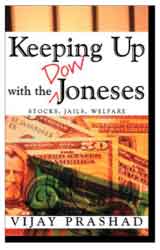 website). On 19 June 2003, when the Iraq
war had already turned into this disastrous occupation, the US House of
Representative's Subcommittee on Select Education held a hearing on
"International Programs in Higher Education and Questions About Bias." The
lead plaintiff at the hearing was Stanley Kurtz, a rather well known
partisan from the Hoover Institute and National Review, who makes Bernard
Lewis seem a liberal. Kurtz testimony invoked Said in his claim that most
area studies centers are currently teaching anti-Americanism. "Said
equated professors who support American foreign policy with the 19th
century European intellectuals who propped up racist colonial empires. The
core premise of post-colonial theory is that it is immoral for a scholar
to put his knowledge of foreign languages and culture at the service of
American power." Actually this is not a bad summary of Said's argument on
culture and imperialism. website). On 19 June 2003, when the Iraq
war had already turned into this disastrous occupation, the US House of
Representative's Subcommittee on Select Education held a hearing on
"International Programs in Higher Education and Questions About Bias." The
lead plaintiff at the hearing was Stanley Kurtz, a rather well known
partisan from the Hoover Institute and National Review, who makes Bernard
Lewis seem a liberal. Kurtz testimony invoked Said in his claim that most
area studies centers are currently teaching anti-Americanism. "Said
equated professors who support American foreign policy with the 19th
century European intellectuals who propped up racist colonial empires. The
core premise of post-colonial theory is that it is immoral for a scholar
to put his knowledge of foreign languages and culture at the service of
American power." Actually this is not a bad summary of Said's argument on
culture and imperialism.
Kurtz recommends a reversal of the Said claim.
Indeed he wants the government to oversee the Title VI funds given over to
universities for the study of the rest of the world. The House accepted
the critique and the recommendations. They have now written H. R. 3077
that adopts all this language, they passed it and have sent it along to
the Senate (who is expected to start deliberations on it come the new
year).
H. R. 3077 is not a break from US government policy.
It is a reaction to the break made by many scholars within Area Studies
from the goals of US imperialism. The establishment wants to take back
Area Studies programs to the goal of their origination. Area Studies
emerges in the early part of this century mostly as part of US evangelism:
K. S. Latourette at Yale helped kick-start East Asian studies (his 1929
book is History of the Christian Missions in China); H. E. Bolton at
Berkeley pioneered Latin American Studies (his 1936 book is The Rim of
Christendom: A biography of Eusebio Francisco Kino, Pacific Coast
Pioneer); A. C. Coolidge at Harvard worked out the contours of Slavic
Studies (his big book of 1908 is entitled The United States as a World
Power). In its infancy, the Church and Washington held sway over Area
Studies. Our evangelical imperials of today want to return to this
period.
Toward the end of Orientalism, Said noted that the
US academy had taken over the Orientalist mantle from the Europeans after
World War II and the "area specialist," he noted, "lays claims to regional
expertise, which is put at the service of government or business or both."
Area Studies, or the study of the world within the US academy, indeed has
a complex history, much of it mired in an eagerness to please the powers.
University of Chicago's sociologist Edward Shils said of his secondment to
the War Department in the 1940s, that he was "glad of the vacation from
teaching [and] enjoyed the excitement of proximity to great events and to
great authority as well as to the occasional exercise of power on [our]
own." Such is perhaps a good summary of the intentions of those academics
who want to will themselves to power--venality mixed with a dose of the
luxury afforded to the venal.
In 1951, a Social Science Research Council report
regretted the "woeful lack of area experts, however defined" and it argued
that the best thing for US domination of the world was "the launching of
scores of area programs." In a moment of candor, the report authored by
University of Michigan East Asia scholar Robert Hall, noted, "We must know
if we are to survive." Much of what Said detested in Area Studies
(particularly the study of the Arabic speaking peoples) is a result of the
policies put in place in the wake of the SSRC report.
The campus struggles during the Vietnam War and the
uprisings of students of color (the Third World Strike) pushed the academy
to rethink Area Studies. As Said notes in Orientalism, "The Committee of
Concerned Asia Scholars (who are primarily American) led a revolution
during the 1960s in the ranks of East Asia specialists; the African
studies specialists were similarly challenged by revisionists; so too were
other Third World area specialists." (He regrets that such a change did
not come for Arabists and Islamologists--although after his book such
change has been afoot to such a degree that it has provoked an immense
backlash from people like Daniel Pipes, Bernard Lewis, Martin Kramer and
Stanley Kurtz).
With the demise of the Soviet Union, the assault on
Area Studies started afresh. We were told that all campuses must
"internationalize," an idea that is on the surface very appealing and it
drew support from many Area Studies people (in the mid-1990s the Ford
Foundation held a competition for funds to rethink Area Studies, a
competition that drew most major universities and colleges). All talk of
"internationalization" does not have humanitarian or liberal instincts,
since the recent initiatives are driven principally by the military and by
business.
Stanley Kurtz has used 9/11 and the recent wars as
an excuse to recycle a bill that made its first appearance in 1992 thanks
to Representative David Boren. In the National Security Education Act of
1992 Congress wished to "produce an increased pool of applicants for work
in the departments and agencies of the US government with national
security responsibilities" (article 3). The bill would have become law a
decade ago had Newt Gingrich not taken control of Washington and nixed it
in his bid to defund education in general. He probably didn't read the
fine print.
The business implications of internationalization
came to the fore in 1990, when the National Governors Association bemoaned
the lack of international education for college graduates in a globalized
world. "The best jobs, the largest markets and the greatest profits will
flow to the workers and firms that understand the world around them," said
the governors. Their analysis of recent history led to the assessment that
"a lack of understanding and inability to communicate contributed to such
events as the war in Vietnam, the hostage crisis in Iran, the OPEC oil
crisis and the political consequences of the Bhopal industrial disaster."
The motives of power and profit are freed of any responsibility for this
litany of ills--we are left with E. M. Forster's dictum, "Only
Connect."
Title VI is not a one-dimensional weapon of imperial
domination: it has allowed for the creation of vast amounts of knowledge
mobilized by progressives to help us to understand the dilemma of our
world. Yale historian David Montgomery writes that we need to review the
Cold War experience of Area Studies and the academy "not only to teach us
how the human imagination has been contained, but also how it has broken
through the veils of secrecy and deception." Area Studies has enabled us
to better understand the creativity of popular social and left movements,
and it has shown us how the theory of the GDP stifles the liberty of
people around the globe. For us to continue our struggle to breathe life
into Area Studies, to make it a real partisan of radical thought against
the dreary deserts of pragmatism and of domination, we have to resist the
new bill as it wends through Congress.
Michael Bednar asks us to write to our local
representatives. That is always a good idea. Here's another one. If you
are on a college campus, start a student-faculty-staff group in defense of
Postcolonial/Area Studies--and push the administration to take a position
on the issue along the lines of freedom of speech. If you are not on a
college campus, then express your outrage in the local paper about the
government's infringement on the liberty of intellectual thought. All
political groups should take this seriously: it is not just about the
academy, but also about the attempt by the state to make the academy into
the emissary of Empire.
If you are interested in a campaign against this
Kurtzian offensive, send me an email.
Vijay Prashad is an
Associate Professor and Director of the International Studies at Trinity
College, Hartford, CT. His two most recent books are Fat
Cats and Running Dogs: The Enron Stage of Capitalism and Keeping
Up with the (Dow) Joneses Prashad can be reached at: Vijay.Prashad@trincoll.edu
Weekend Edition
Features for Nov. 8 / 9, 2003
Kathleen and Bill
Christison
Zionism as
Racist Ideology
Gabriel Kolko
Intelligence for
What?
The Vietnam War Reconsidered
Saul Landau
The
Bride Wore Black: the Policy Nuptials of Boykin and
Wolfowitz
Brian Cloughley
Speeding Up
to Nowhere: Training the New Iraqi Police
William Blum
The Anti-Empire
Report:
A Permanent Occupation?
David Lindorff
A New Kind of
Dancing in Iraq: from Occupation to Guerrilla War
Elaine Cassel
Bush's War on
Non-Citizens
Tim Wise
Persecuting the
Truth: Claims of Christian Victimization Ring Hollow
Toni Solo
Robert Zoellick
and "Wise Blood"
Michael Donnelly
Will the Real
Ron Wyden Please Stand Up?
Mark Hand
Building a
Vanguard Movement: a Review of Stan Goff's Full Spectrum
Disorder
Norman Solomon
War, Social
Justice, Media and Democracy
Norman Madarasz
American
Neocons and the Jerusalem Post
Adam Engel
Raising
JonBenet
Dave Zirin
An Interview
with George Foreman
Poets' Basement
Guthrie, Albert
and Greeder
Keep CounterPunch
Alive:
Make a
Tax-Deductible Donation Today Online!
home / subscribe
/ about us / books / archives / search / links /
|