|
Reagan's Osama Connection
How he turned a jihadist into a terrorist kingpin.
By
Fred Kaplan
Posted Thursday, June 10, 2004, at 4:34 PM PT
|
|
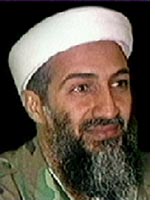
Earlier this week, I cited recently
declassified documents to show that Ronald Reagan did indeed play a major role
in ending the Cold War. Now it's time to note that a similar set of documents shows that Reagan also played a
major role in bringing on the terrorist war that followed—specifically, in
abetting the rise of Osama Bin Laden.
Once again, the story concerns the
fascinating relationship between Reagan and Soviet leader Mikhail Gorbachev.
Gorbachev took the helm as the
reform-minded general-secretary of the Communist Party of the Soviet Union in
March 1985. Within months, he had decided privately to pull Soviet troops out
of Afghanistan. One of his predecessors, Leonid Brezhnev,* had invaded Afghanistan in 1979, and the move was
proving a disaster. Tens of thousands of Soviet troops had died; military
morale was crumbling; popular protest—unheard of, till then, in Communist
Russia—was rising. Part of the Soviet failure in Afghanistan was due to the
fact that the Reagan administration was feeding billions of dollars in arms to
Afghanistan's Islamic resistance. Reagan and, even more, his intensely
ideological CIA director, William Casey, saw the battle for Afghanistan as a titanic
struggle in the war between Eastern tyranny and Western freedom. (Jimmy
Carter and his national security adviser, Zbigniew Brzezinski, had started
assisting the resistance, but with not nearly the same largess or ambition.)
At
a Politburo meeting of Nov. 13, 1986, Gorbachev laid his
position on the table: The war wasn't working; it had to be stopped:
People ask: "What are we doing there?" Will we be there
endlessly? Or should we end this war? ... The strategic objective is to finish
the war in one, maximum two years, and withdraw the troops. We have set a clear
goal: Help speed up the process, so we have a friendly neutral country, and get
out of there.
In
early December, Gorbachev summoned President Najibullah, the puppet leader of
Afghanistan, to give him the news: The Soviet troops would be leaving within 18
months; after that, he was on his own.
Two
months later, on Feb. 23, 1987, Gorbachev assured the Politburo that the troops
wouldn't leave right away. He first had to foster a stable environment for the
reigning government and to maintain a credible image with India, the Soviet
Union's main ally in the region. The exit strategy, he said, would be a
negotiated deal with Washington: The Soviets pull out troops; the Americans
stop their arms shipments to the rebels.
However,
within days, Gorbachev learned to his surprise that Reagan had no interest in
such a deal. In a conversation on Feb. 27 with Italy's foreign minister, Giulio
Andreotti, Gorbachev said, "We have information from very reliable sources
… that the United States has set itself the goal of obstructing a settlement by
any means," in order "to present the Soviet Union in a bad light."
If this information is true, Gorbachev continued, the matter of a withdrawal
"takes on a different light."
Without
U.S. cooperation, Gorbachev couldn't proceed with his plans to withdraw.
Instead, he allowed his military commanders to escalate the conflict. In April,
Soviet troops, supported by bombers and helicopters, attacked a new compound of
Islamic fighters along the mountain passes of Jaji, near the Pakistani border.
The leader of those fighters, many of them Arab volunteers, was Osama Bin
Laden.
In
his magisterial book, Ghost Wars (possibly the best diplomatic history
written in the past decade), Steve Coll recounts the fateful consequences:
The battle lasted for about a week. Bin Laden and 50 Arab
volunteers faced 200 Russian troops. … The Arab volunteers took casualties but
held out under intense fire for several days. More than a dozen of bin Laden's
comrades were killed, and bin Laden himself apparently suffered a foot wound. …
Chronicled daily at the time by several Arab journalists … the battle of Jaji
marked the birth of Osama bin Laden's public reputation as a warrior among Arab
jihadists. … After Jaji he began a media campaign designed to publicize the
brave fight waged by Arab volunteers who stood their ground against a
superpower. In interviews and speeches … bin Laden sought to recruit new
fighters to his cause and to chronicle his own role as a military leader. He
also began to expound on expansive new goals for the jihad.
Had
Gorbachev thought that Reagan was willing to strike a deal, the battle of Jaji
would not have taken place—and the legend of Bin Laden might never have taken
off.
Reagan
can't be blamed for ignoring the threat of Osama Bin Laden. Not for another few
years would any analyst see Bin Laden as a significant player in global
terrorism; not till the mid-1990s would his organization, al-Qaida, emerge as a
significant force.
However,
Reagan—and those around him—can be blamed for ignoring the rise of
Islamic militancy in Afghanistan and for failing to see Gorbachev's offer to
withdraw as an opportunity to clamp the danger. Certainly, the danger was, or
should have been, clear. Only a few years had passed since the Ayatollah
Khomeini rose to power in Iran—the shah toppled, the U.S. Embassy employees
held hostage, the country turned over to the mullahs, the region suddenly
destabilized. Reagan beat Jimmy Carter so decisively in the 1980 election in
part because of the hostage crisis.
Gorbachev
had accepted that Afghanistan would become an Islamic country. But he assumed
that Reagan, of all people, would have an interest in keeping it from becoming
militantly, hostilely, Islamist.
In
September 1987, after the previous spring's escalation failed to produce
results, Soviet Foreign Minister Edvard Shevardnadze met with Secretary of
State George Shultz to tell him that Gorbachev planned to pull out of
Afghanistan soon. He asked Shultz for help in containing the spread of
"Islamic fundamentalism." Shultz had nothing to say. Most Reagan
officials doubted Gorbachev would really withdraw, and they interpreted the
warnings about Muslim radicals as a cover story for the Soviet Union's military
failure.
By
this time, Reagan and Gorbachev had gone some distance toward ending the Cold
War. The dramatic moment would come the following spring, during the summit in
Moscow, when Reagan declared that the U.S.S.R. was no longer an "evil
empire." At the same time, though, the U.S. national-security
bureaucracy—and, in many ways, Reagan himself—continued to view the world
through Cold War glasses.
After
the last Soviet troops departed, Afghanistan fell off the American radar
screen. Over the next few years, Shevardnadze's worst nightmares came true. The
Taliban rose to power and in 1996 gave refuge to the—by then—much-hunted Bin
Laden.
Ten
years earlier, had Reagan taken Gorbachev's deal, Afghanistan probably still
wouldn't have emerged as the "friendly, neutral country" of Gorby's
dreams. Yet it might have been a neutral enough country to preclude a Taliban
takeover. And if the Russian-Afghan war had ended earlier—if Reagan had
embraced Gorbachev on the withdrawal, as he did that same autumn on the massive
cutback of nuclear weapons—Osama Bin Laden today might not even be a footnote
in history.
Correction, June 11:
Leonid Brezhnev was general-secretary of the Communist Party of the Soviet
Union at the time of the Afghanistan invasion, not Yuri Andropov as the article
originally stated. (Return
to the corrected sentence.)
Related in Slate