 |
|
| |
|
Editor Gary C. Gambill Executive Director David Epperly Send questions or comments to info@mideastmonitor.org |
Hezbollah's Dilemmas by Rodger Shanahan Dr. Rodger Shanahan is a visiting research fellow at the Research Institute for Asia and the Pacific, University of Sydney. He is the author of Clans, Parties and Clerics: the Shi'a of Lebanon (2005, IB Tauris).
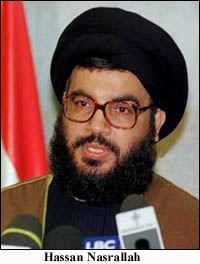
In Lebanon, where Shiites are neither a majority large enough to legitimately claim political supremacy, nor a minority small enough to be legitimately overruled on major political issues, the challenges are even more complex. Lebanon's most popular Shiite political force is the militant Islamist Hezbollah movement,[2] a product of its successful campaign to expel Israeli troops from the country, provision of social services to the Shiite community, and reputation for incorruptibility. The departure of Syrian forces last April has given Hezbollah Secretary-General Hassan Nasrallah an unprecedented opportunity to convert the movement's popularity into political power. In order to do this, however, Hezbollah will have to resolve three critical dilemmas. Shiite Political Emancipation Shiites do not enjoy equality under Lebanon's constitution. Although estimated to comprise up to 40% or more of the population, they are limited to 21% of parliamentary seats and barred from becoming president or prime minister. Hezbollah initially opposed the 1989 Taif Accord because it failed to rectify this imbalance, but grudgingly suspended its calls for equal representation after Syria completed its takeover of Lebanon in 1990. The pullout of Syrian forces and the success of Iraqi Shiites in attaining political power commensurate with their demographic weight have brought the cause of Shiite political emancipation to the forefront of Lebanese politics (if not the forefront of public debate). However, most Lebanese Christians, Sunnis, and Druze are unwilling to accept any sweeping alteration to the country's confessional power-sharing formula that would favor Shiites. Although Hezbollah long ago abandoned its early aspirations to import Iran's theocratic model into Lebanon, its militant Islamist identity and close relationship with Iran remain unpalatable to the other sectarian groups. In light of these obstacles, a full-fledged Hezbollah campaign to amend the constitution (peaceful or otherwise) would face enormous difficulties. In the meantime, Hezbollah is faced with the question of how to advance its interests in the political system. It steered a middle path during the Syrian occupation, participating in parliamentary elections while remaining outside of the government. This was not entirely by choice (the Syrians barred Islamists from Lebanon's cabinet, fearing their presence might make the occupation less palatable to the West), but it fitted Hezbollah's needs. The movement's reputation for incorruptibility is derived in part from having remained outside of government for the first twenty-three years of its existence. During the occupation, Hezbollah didn't have to worry that the Lebanese government would act against its interests. With Syrian troops gone, however, this middle path is no longer viable.
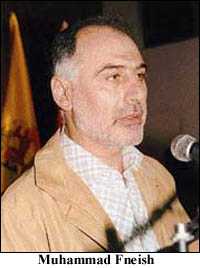
After the elections, Hezbollah member Muhammad Fneish joined the Lebanese cabinet as energy minister (and a Shiite close to the movement, Trad Hamadeh, became labor minister). To be considered a serious contender for political power in the new Lebanon, Hezbollah must demonstrate that it can run ministerial portfolios and make the compromises necessary in political alliances. Full-fledged participation in the political system carries risks. In addition to lending legitimacy to the confessional power-sharing formula, Hezbollah's entrance into government could taint its reputation for probity. The rival Shiite Amal movement started off as a religious movement striving for social justice, but largely abandoned its principles in exchange for political power over the years, growing enormously corrupt (and unpopular) in the process. Disarmament The second, related, dilemma faced by Hezbollah concerns the future of its paramilitary apparatus. Hezbollah was exempted from disarmament at the end of the civil war in 1990, partly because Iran and Syria wanted to encourage resistance to Israeli forces occupying south Lebanon and partly as a quid pro quo for the movement's tacit acceptance of the Taif Accord. Hezbollah's war against the Israeli occupation garnered broad support across the sectarian spectrum in Lebanon and admiration throughout the Arab world. Lebanese Shiites, once viewed as marginal to the Arab nationalist cause, clearly relished this spotlight. The Israeli withdrawal also removed Hezbollah's most compelling rationale for maintaining a powerful paramilitary apparatus. Officially, Hezbollah's position is that it will disarm once Israel has withdrawn from the disputed Shebaa Farms and the Lebanese state is capable of defending the country from Israel. The UN ruled against the Lebanese claim to Shebaa in 2000, and UN Security Council Resolution 1559 called for the disarmament of all militias in Lebanon in 2004. So long as Syria controlled Lebanon, few public figures were willing to openly criticize Hezbollah's continuing military buildup and periodic cross border operations against Israel, but the withdrawal of Syrian forces last year removed this critical political cover. Since then, most leading Sunni, Christian, and Druze politicians have openly said that Hezbollah must disarm, though they invariably insist that the issue must be resolved through internal dialogue and none have advocated forcibly disarming it. The vast majority of Shiites, on the other hand, appear to support Hezbollah's refusal to disarm. According to Amal Saad-Ghorayeb, this is because they see its military apparatus as a form of "compensation for Shiite political under-representation."[4] In the absence of sweeping political reforms, Hezbollah will not face significant pressure to demilitarize from its constituents. Under the present circumstances, any attempt by the new Lebanese government to confront Hezbollah militarily would likely provoke inter-sectarian conflict. Since there is no threat of external intervention to disarm Hezbollah, the movement has little political incentive to give up its weapons - on the contrary, they are a powerful political bargaining chip. Giving up its armed wing before reforms to the electoral laws are achieved would see Hezbollah become just another political party in a system that discriminates against Shiites. In view of the election of hardliner Mahmoud Ahmadinejad as Iranian president last year, it is unlikely that Tehran will place any pressure on Hezbollah to disarm. As Iran continues its game of nuclear brinkmanship with the West and grows more isolated internationally, an armed Hezbollah will be an ever more important asset. Eventually, Iran's needs are going to conflict with Hezbollah's domestic political goals and the movement will have to decide where its loyalties lie. Syria The third dilemma faced by Hezbollah concerns its relations with Syria. Given the tremendous upsurge of anti-Syrian sentiments in Lebanon since the assassination of former Prime Minister Rafiq Hariri in February 2005, many observers expected Nasrallah to distance himself from Damascus. On the contrary, he has resolutely defended Syria, antagonizing Sunni, Druze and Christian political leaders. Hezbollah's unwavering support for Syrian President Bashar Assad reflects several considerations. Since the porous Syrian-Lebanese border will probably be the only viable route for future Iranian resupply of Hezbollah, a good relationship with Damascus is critical to its fight against Israel. On the local level, Hezbollah continues to see Syria as a useful foil against those elements of Lebanese society that oppose it. While the Syrian presence in Lebanon was widely disliked, the shared history of the two countries and the size of Syria in relation to its smaller neighbor mean that Damascus will always feature strongly in domestic Lebanese affairs. Moreover, there is a degree of religious affinity between Lebanese Shiites and the minority Alawite sect that dominates the Syrian regime.[5] Hezbollah's defense of Assad also reflects the desires of Iran, which has been a staunch ally of Syria for the past quarter century and has a keen interest in combating its political isolation. By allowing Hezbollah to protest so vociferously in support of Syria, Iran hopes to illustrate to the world that they were wrong in painting Syria as an unwelcome entrant in Lebanese politics. Hezbollah has taken a political risk by being so supportive of Syria. Because of its firm nationalist credentials, this stance probably won't undermine its support among Lebanese Shiites, but it could interfere with its ability to negotiate compromises with other political groups. Vocal support for Syria at a time when anti-Syrian Lebanese politicians are still being killed (most recently Al-Nahar editor Gibran Tueni on December 12) increases the reservations that non-Shiite politicians have about its military apparatus.
In December, Hezbollah's two government ministers suspended their participation in the government (along with their three Amal colleagues) after Prime Minister Fouad Siniora asked the cabinet to vote on a proposal endorsing the establishment of an international court to try those indicted for Hariri's murder. Their main objection was not that the decision was anti-Syrian, but that it was taken through majority vote rather than consensus (a violation, Hezbollah claimed, of its conditions for joining the government). Once they withdrew, Nasrallah added a second condition for their return - that the cabinet issue a statement declaring Hezbollah to be a national resistance movement, not a militia, and therefore not subject to disarmament under the terms of Resolution 1559. In early February, Siniora publicly declared that his government will not call Hezbollah "by any name other than the resistance" (skirting the question of whether it is a militia in violation of 1559) and pledged to rule by consensus, after which Hezbollah announced its intention to return to the cabinet. Although it's not clear what concessions Hezbollah made in the seven weeks of negotiations that preceded this announcement, the resolution of Lebanon's cabinet crisis suggests that the movement remains committed to advancing its interests through the political system. Notes |